CHAPTER FOUR
War Is Not a Malfunction
Mom proved me wrong. The tough coal miner’s daughter—raised in a world of shift work and state-run factories—is turning into a real entrepreneur! She’s already got two batches of chicks clucking around in the backyard, and the first ones are almost ready to lay eggs. There would’ve been more if Benichka hadn’t kept peeking under the hens to see if the eggs had hatched—like he expected it to happen right in front of him.
Mama has started taking small sewing orders from the villagers. She doesn’t earn much, but she doesn’t seem to mind. One neighbour gave her goat cheese for sewing a winter jacket for their dog—and for Mama, cheese is as good as money, if not better.
Papa is seriously into job hunting. Most of the jobs he has applied for are with foreign humanitarian organizations. Mariupol has become a hub for them lately. Since these organizations are mostly foreign-run, they often require English—or at least some basic understanding of it. Even when it’s not officially required, knowing a bit of English can give you an edge.
Papa has taken that seriously. He’s making frantic efforts to learn some basic English, just enough to get by in case something comes through. For now, Sasha is his teacher. It’s kind of like the pot trying to teach the kettle.
I was the first in our family to learn English. In the Soviet education system, learning foreign languages wasn’t exactly a priority. Mama, though, has some basic German. Her childhood
best friend Margaretha was a Volga German whose family had been deported to Kazakhstan after Stalin dissolved the Volga German Republic in 1941. Later, under Khrushchev’s policy, they moved to Donetsk for work. That friend migrated to Germany just before the Soviet Union collapsed. They lost contact after that—but for Mama, German still feels like a bridge to those golden years of friendship.
When I told Mykyta and Katya about what Okello said, they got hooked on his idea—war isn’t just something that happens; it’s built into how the world works now.
Everyone in this country has a war story. Some, like Katya, don’t want to look back. Others, like Mykyta, carry traces of it without even knowing.
Mykyta Serhiiovych Rosilenko—his last name comes from a village called Rosilna. It’s a name that holds a silence. Only his grandmother is still alive from that time, but even she doesn’t know what the name was meant to replace, or what it was trying to hide.
Rosilna was once part of the Austro-Hungarian Empire. After the First World War, it became part of Poland, like many places around Stanisławów, now Ivano-Frankivsk. Then came the Second World War, and the village was taken over—first by the Soviets, then by the Germans. After the war, it ended up in the Ukrainian SSR.
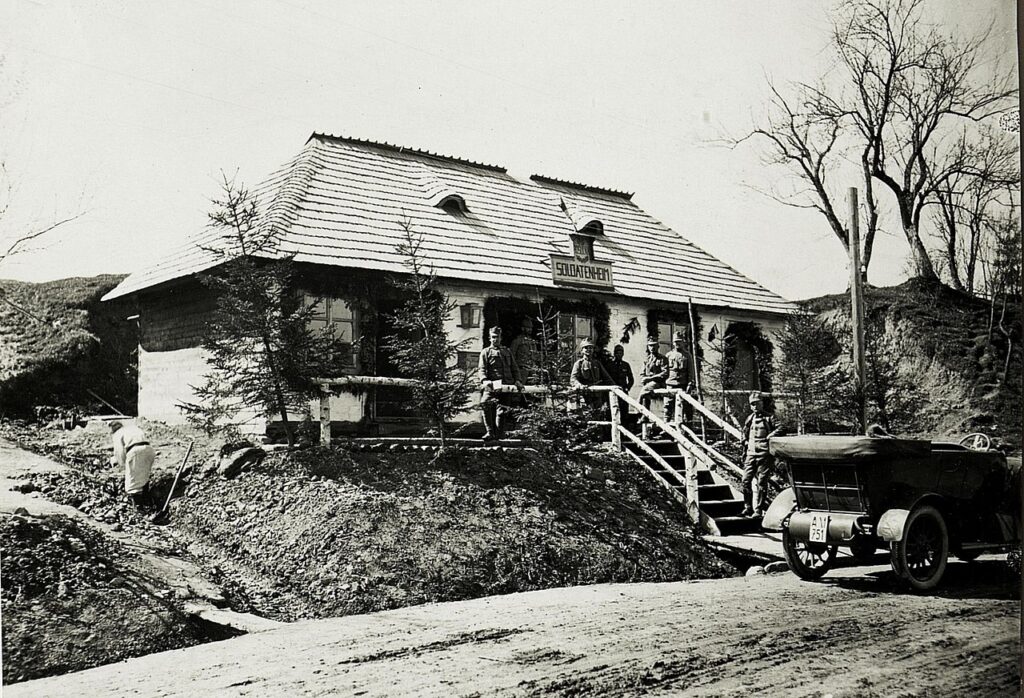
Village Rosilna 1917 - Photo: WikiMedia Commons
A lot of men never came back—killed in war, taken away, or just gone. The ones who stayed didn’t always want to talk. During Soviet identity registration, some people chose not to give their real last names. Maybe they were scared. Maybe their husbands had been part of the wrong group. So the registration clerks gave them a new one—usually based on the name of the village.
Mykyta’s grandma was just two when her mother packed a small bag, picked her up, and left Rosilna behind. It took a bus and a train to reach Zaporizhzhia. People were saying there was work there—something steady, something safe. The Soviet farms were hiring, and that was reason enough to travel a thousand kilometres. She grew up watching her mother work those fields—alone, but determined. As for her father, she knew nothing. Her mother never spoke of him, and she learned not to ask.
I spoke to Okello again and arranged to meet next Friday, after work. He was glad to hear that Mykyta and Katya would be coming too. He had another place in mind at first, but Katya quietly suggested the river station instead. She had never been there, despite living in Kyiv for over a year, but something in the way I described it made her fall in love with the place.
Katya and I met Mykyta again at the grand entrance of the Ministry of Foreign Affairs. The funicular is just beside it. Once you ride it down and step out, you cross the road—and there it is: the river station, right in front of you. It’s almost surprising how close the Dnipro is to the city centre.
As expected, Okello was already there, his beer glass half empty. He’d even saved three bean bags for us. Mykyta sank right into the conversation—nation-states, and how their way of thinking keeps pulling the world back into war. Most of it was ground I’d already covered with Okello. Meanwhile, Katya sat quietly beside me, occasionally pinching my arm. Eventually, I smiled, surrendered, and let her steal me away. I stood up and followed her toward the edge of the food court for a little photo session.
I kept snapping photos until Katya finally got tired of posing. Once her mind was satisfied, she walked over to one of the kiosks and bought ice cream cones for all of us. She didn’t ask Okello if he wanted one—just handed it to him. He smiled.
Katya
Remember last time you said food tasted better in Gulu, when you had just a few options, than in a London supermarket with thousands? I guess I just saved you from making a choice.
Okello
Thank you! You know, sometimes I look at my kitchen in London—every cabinet is packed. Canned food, dried food, grains, cereals, snacks, cookies—you name it, it’s there. And not just one kind—there are five brands of everything, in case I change my mind five times. The fridge is so full that we had to buy a second one. And still, some nights, we just order pizza or Chinese. Because somehow, with all that food, there’s still “nothing to eat.”
Katya
Choices are good, aren’t they? Better than not having any. Look at what happened to the Soviet Union. You really think people were happy without choices?
Okello
You just proved the point I wanted to make today. We’re getting too used to a two-dimensional way of looking at certain things. Socialism vs. capitalism, East vs. West, freedom vs. oppression—and the list goes on. The moment you sensed I was sick of these endless choices, your mind jumped to the Soviet Union, where there were almost no choices at all.
I
Guys, we’re drifting away from the main issue. Capitalism and fiat currency—that is, money not backed by anything of intrinsic value, right? How did those two become factors that inevitably led to war?
Okello
I said three, remember? The first—and maybe the most important—is the centralization of ideas, which shaped the nation-states as we know them today. We’ve already talked about that, so I won’t repeat it.
The classic definition of capital is that it’s the produced means of production…
Katya
Wait, wait—hold on. You’re not giving a lecture at Cambridge. Speak like a human, please.
Okello
Put simply, capital is something that helps make other things. You use it to produce goods and services, earn profit, and that profit becomes new capital. Then the cycle starts again. It just keeps going like that. So, imagine you have a company with $100 in capital, and your goal is to make a 10% profit each year. In the first year, you make $10. Now your capital is $110. Next year, to make the same 10% profit, you need to earn $11, not $10 like last time. And it keeps growing like that, year after year.
Like your company, every company in the world wants that little bit of extra income each year. But here’s the question—where does that extra profit come from? Someone has to buy those additional goods and services, right?
You’ve got a few options. The global population keeps growing, so more people buy more things. Or, that people consume more per person. Like my kitchen in London, remember? Packed shelves, second fridge, food I’ll never finish. But there’s a limit to that. At some point, I run out of space in the kitchen—or in my stomach. So, what then?
I
I get it so far. Keep going—I’m listening.
Okello
Another option is to make things expire faster. Like, take Himalayan salt—it’s been sitting untouched in the mountains for thousands of years, but the moment it hits your kitchen shelf, it apparently dies in three.
I
You don’t need a war for a product to expire. So what, then, is the connection with war?
Okello
Think. Use your imagination. I already gave you the clue—expire.
I
By making the products malfunction, like my phone. After a software update, the hardware doesn’t work properly anymore. And then, eventually, you’re forced to think about buying a new one
Mykyta
That still counts as expiring, doesn’t it?
Okello
What if the property gets destroyed? That’s just another form of expiration—only faster. You’ll need to buy it again.
The global military budget is around 2.5% of the world’s GDP, which means trillions of dollars in demand for goods and services—military goods and services. Tanks, missiles, fighter jets, surveillance systems—all of it has to be produced, maintained, and upgraded.
But that’s just the start. Now add the demand created by destruction itself. Nobody fires a million-dollar missile to blow up a fifty-dollar bicycle. They go after high-value targets—telecom towers, energy grids, ports, bridges. And once they’re gone, someone has to rebuild them. More demand. More production. The cycle keeps spinning.
For every death in war, five to seven are injured—feeding long-term demand for drugs, devices, and care.
Media is a multi-trillion-dollar industry, and war is one of its most profitable narratives—more gripping than celebrity scandals or even your favourite royal family’s divorce.
Mykyta is shaking his head. He thinks that’s too much of an oversimplification. Sure, defence budgets are massive, and war—along with the destruction it causes—creates demand for goods and services, but he doesn’t believe that means capitalism causes war.
He’s trying to argue that the relationship is incidental, not causal.
Okello disagrees. He brings up example after example of corporations with direct influence over foreign policy—oil companies shaping decisions in the Middle East, defence contractors thriving on prolonged conflicts. To him, it’s not just an overlap of interests; it’s a system where profit and policy feed into each other.
Okello walked us to a kiosk that sells something called a Black Burger—the bun is literally pitch black. He made a quick joke: “Finally, something here that’s blacker than me.” None of us laughed. There was a short silence—not awkward, but not easy either. We walked back to our bean bags with the burgers. Okello started talking about money, and it was interesting right from the start. The way he broke it down—as a store of value, a means of exchange, a unit of account—caught all of us by surprise.
Okello
Historically, money—whether it was gold, silver, or any other commodity like silk or tobacco—had intrinsic value. It might’ve been stamped with a royal seal, like Roman coins or any other coins, but it was still private property. You could use the gold as money, or melt it down and make jewellery. You could trade silk or weave it into cloth. Even paper currencies, which first appeared in 11th-century China, were historically backed by commodities with intrinsic value, such as copper, silver, or gold.
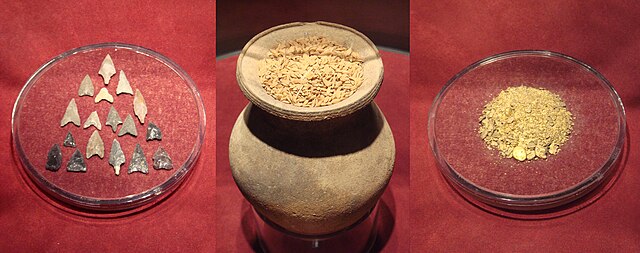
8th Century Japan Commodity Money - Photo: PHGCOM
Mykyta
I see where you’re going with this. For a long time, money was more like private property—backed by something real, something you could claim. It gave people protection because the government had to hold a tangible value behind it. When did that system fall apart?
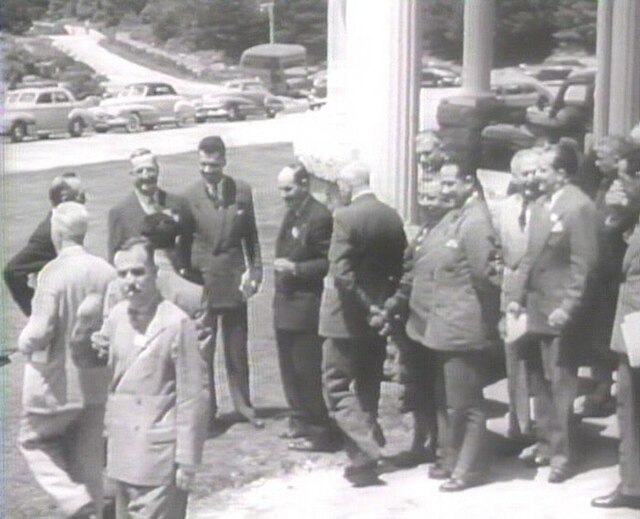
Bretton Woods Conference 1944
Okello
History saw a few experiments with fiat currency, most notably in 13th-century China and during the World War I when Europe ran out of gold and sliver, but both ultimately ended in inflation, economic hardship, and the collapse or abandonment of the system.
During World War II, as Europe again ran out of gold and silver, 44 Allied nations met in 1944 in a small town called Bretton Woods, New Hampshire. That’s where they signed the Bretton Woods Agreement.
The deal was simple: after the war, the U.S. dollar would become the world’s reserve currency. The U.S. promised to hold one ounce of gold for every thirty-five dollars printed. Other countries would hold dollars in their reserves and peg their own currencies to the dollar. That way, their money was indirectly backed by gold—because the dollar was.
However, by 1971, the U.S. had printed almost three times more dollars than it had gold to back them. Foreign governments started asking for gold in exchange for their dollar holdings.
To stop the gold drain, President Nixon pulled the plug. He ended the dollar’s convertibility to gold—just like that. From that moment on, the dollar, and eventually all world currencies, became fiat money—backed by nothing but government trust.
Katya
What’s the connection with war?
Okello
Think, Katya, think. It’s not that difficult.
I
Governments around the world no longer need their people’s permission—or even their money—to go to war. They can just print it.
Okello:
Yes. Imagine if a democratic government asked every citizen to hand over 20% of their life savings to fund a war 10,000 miles away—just to topple some dictator. What do you think people would say?
I
They’d vote the government out of power the very next morning! But now, they don’t need my permission or my money—printing 20% more paper gets them the same result.
Okello
By the way, your city’s mayor was a famous boxer, so you might have heard about Muhammad Ali. While refusing to serve in Vietnam, Ali famously said “I ain’t got no quarrel with them Viet Cong,” and “No Viet Cong ever called me nigger.”
He wasn’t just refusing the war—he was demanding his government to look inward. If people had a real say, they’d probably ask their leaders to fix what’s broken at home instead of spending their money fighting wars in far-off places.
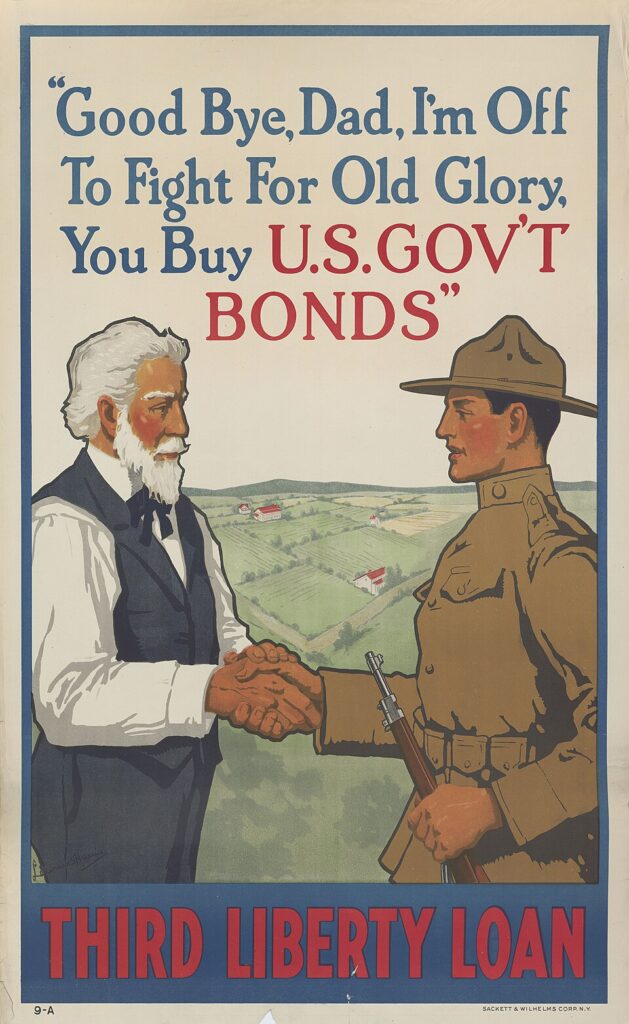
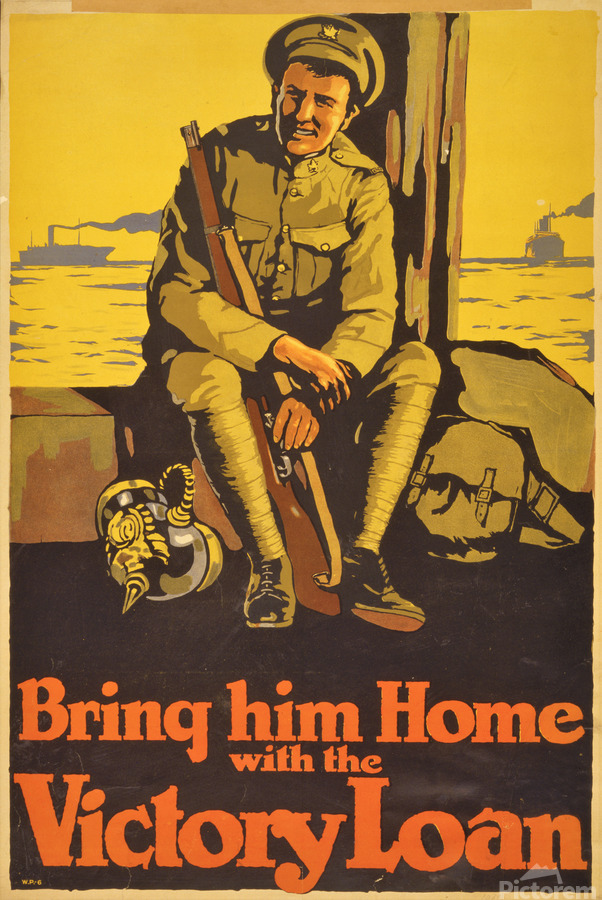
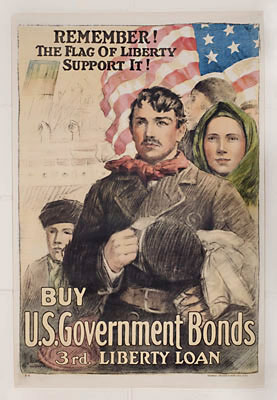
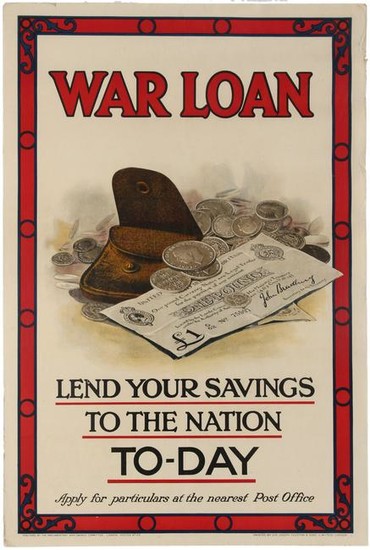
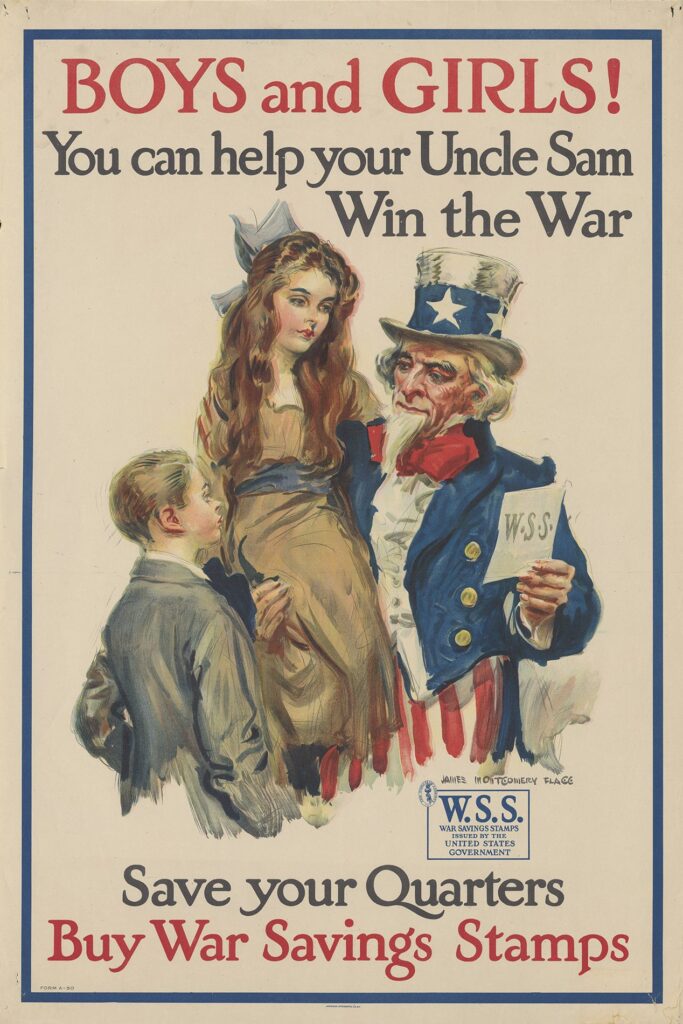
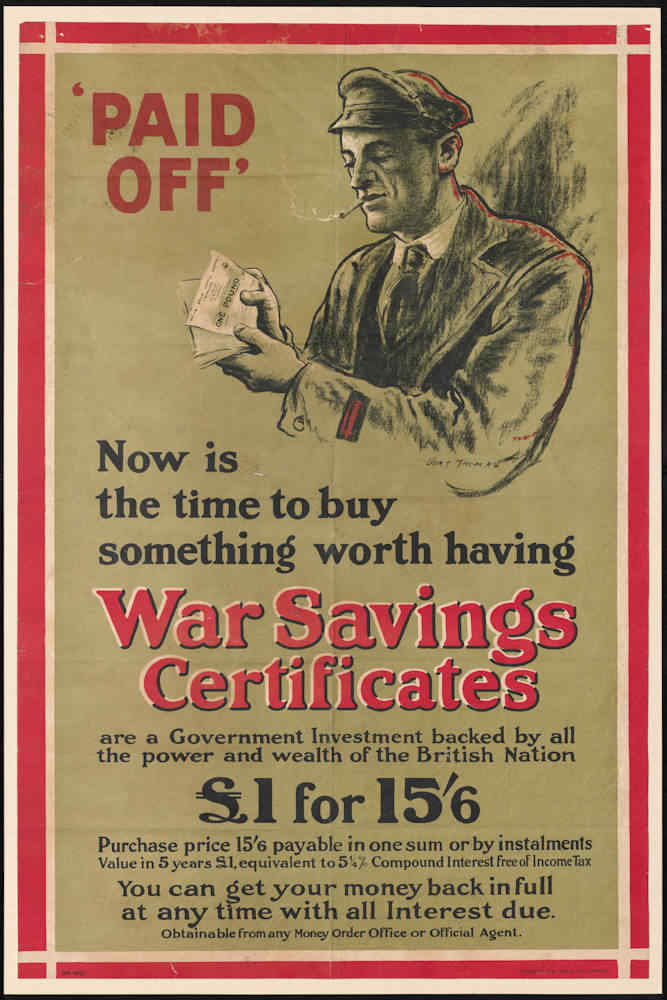
When war needed consent: pre-fiat fundraising (WWI) through bonds and public appeal
The removal of money as a barrier to war blurred the line between foreign policy and domestic political and economic agendas. And with that, the list of reasons to go to war quietly expanded.
Your government is losing popularity at home? No problem—stir up some nationalist feeling, start a war, and suddenly you’re back in power on a wave of public support.
Got a recession? Go to war—the economy kicks into motion, and recovery begins.
Your friends in the defence industry aren’t making enough money? Go to war, and watch public funds quietly flow into their company’s balance sheet.
It was already late, and we were among the last to leave. The metro had stopped running, so we called two taxis. While we waited, Katya quietly picked up the napkins, wrappers, and cups we’d left behind. Okello watched her for a moment, then said how impressed he was by how Ukrainians take care of the public spaces they use.
Some good news came this week from Volnovakha—Papa got a job in Mariupol. He’ll be driving for some international humanitarian NGO. The pay’s insane. Like, three times more than what he was making as an engineer back in Donetsk. Wild, right?
But here’s the catch: a good salary only works if your expenses don’t eat it alive. Mariupol is way more expensive than Donetsk. Back home, we had our own flat. Now Papa has to rent—and rent’s gone through the roof in Mariupol since the war started.
Mama’s already started winding down the chicken farm. She handed the fowls over to one of the neighbour aunties. Her husband—whose body above the waist hasn’t felt the touch of cotton, at least not in the two weeks I’ve seen him—is a proper workhorse. He helped Papa sort out all the junk metal that once ruled the dacha backyard like some rusted empire.
The man doesn’t need food. Just a steady drip of cheap vodka and he’s good to go. Grandpa once told me the Soviet Union collapsed faster because people couldn’t forgive the regime for trying to regulate alcohol. After meeting Dacha uncle, I have zero reason to doubt him.
Mama is selling the grown chickens one by one. It doesn’t bring in much, but she’s saving whatever she can. She says she’ll need some extra money to buy small things for the new flat in Mariupol—things Papa would never agree to spend on.
Given that, with an engineering background, Papa only managed to get a driving job, Mama has little chance of landing any decent-paying work in Mariupol. She thinks she’s better off continuing her tailoring gig rather than working for peanuts at a bakery—and we all agree with that.
Katya and I are planning to set up an online store for Mama—probably on one of the social media platforms. We’ll start with pet clothing, but also add other items she’s good at, like adaptive clothes for people with disabilities, converting maternity wear, and making custom baby carriers and wraps. Once Sasha settles into his new school in Mariupol and Papa starts his job, Mama will finally have the time and space to spread the word and grow her little business.
I went to the train station today and bought a ticket to Mariupol for New Year and Orthodox Christmas. I really hope Papa will have moved there by then. I don’t want to meet them in Volnovakha—that toilet still disgusts me.
On the way back, I picked up a gift card from one of those cosmetics franchises for Katya. That’ll be her Christmas gift. It doesn’t have much on it—just a few dollars—but still.
It’s St. Nicholas Day today. Katya wanted to do her Christmas shopping, so I went with her. On the way back, we’re planning to meet Okello briefly at St. Sophia’s square to wish him a merry Christmas and a happy New Year in advance. None of us are staying in Kyiv for the holidays—Okello’s heading to London, and Katya’s going to Rivne.
Along with a long list of gifts for her family in Rivne and for Mykyta, Katya bought me a pair of warm, fancy gloves—something I really needed. Then we spent the whole afternoon searching for something Sasha would love. She finally found it: a Shakhtar Donetsk jersey—Number 20, with Douglas Costa written in bold across the back. Katya has a bit of disposable income from what she earns at her part-time job at the coaching centre.
We stopped by a greeting card shop and picked out a card for Okello. Katya and I both signed it. From there, we began the long walk to St. Sophia’s Square, where we were to meet Okello.
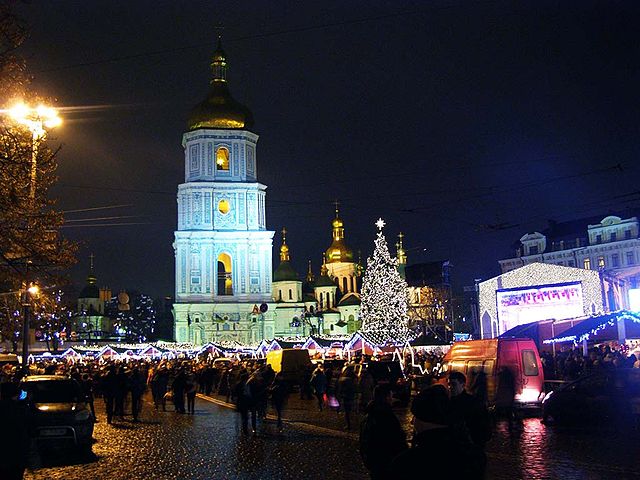
St. Nicholas Day, Kyiv 2014 - Photo: Qypchak
As Katya and I got closer to St. Sophia’s square, we saw the huge Christmas tree standing in the centre, covered in shiny, colourful ornaments that looked like stars. The square felt like a winter wonderland. Soft lights hung above us, crisscrossing through the air and twinkling in the dark. People were laughing, and Christmas music floated from the food and gift stalls. The smell of grilled meat and pastries was everywhere, drawing in kids with rosy cheeks and bright winter hats.
Okello texted—he said he was somewhere nearby. We scanned the crowd, trying to spot him. It was hard at first… but let’s be honest, with his skin tone, he actually made it easier for us. He even laughed when we told him that.
We stopped at one of the stalls selling warm mulled wine. The pot was quietly bubbling, and the air smelled of cloves and cinnamon. We got three medium cups and wandered around the square, talking and sipping.
It took us a few minutes to realise Okello wasn’t dressed warmly enough. He was trying to play it cool, but you could tell he was freezing. We told him to head home early tonight.
Okello’s taxi pulled up. Just as he stepped in, Katya handed him the card. He paused, eyes lingering on the three yellow cartoon characters grinning up at him. His smile came slow—quiet, full, almost shy—as he read inside: “You are one in a Minion.”