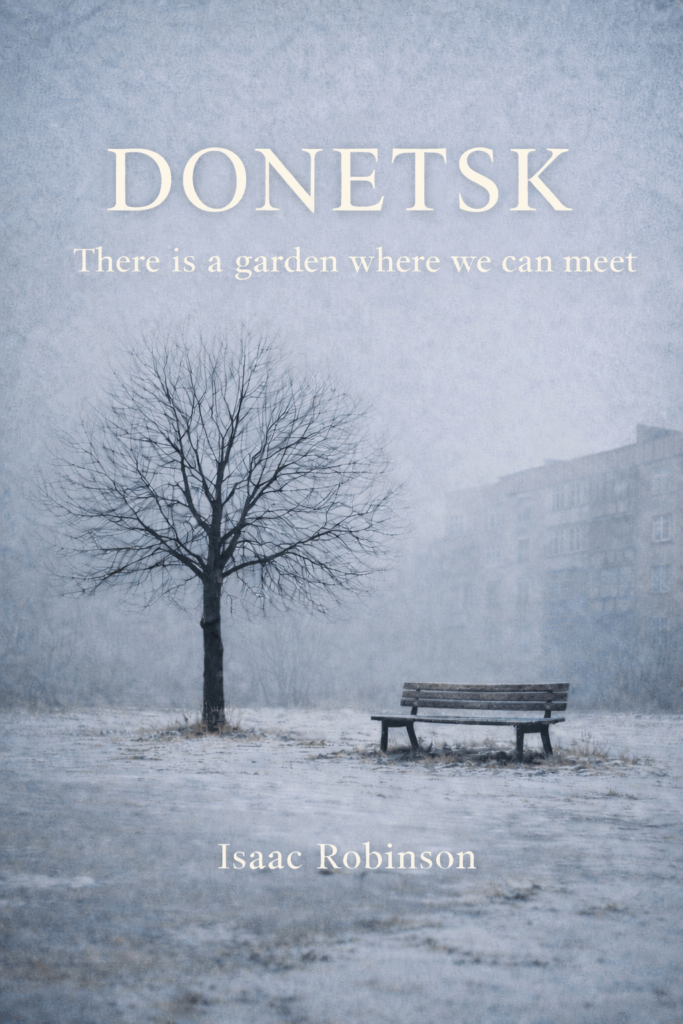
CHAPTER FIVE
Life is a Blanket on a Winter Night
My parents moved to Mariupol in the middle of the month—into a 43-square-metre, two-bedroom apartment in the Prymorskyi District. The rent is higher than what you’d pay in the Left Bank area, but considering Sasha’s school and how close it is to the city centre, this was the best choice. Sasha will only need to walk about 20 minutes to get to school.
Katya came to the railway station to see me off. It’s the same train I took when I first came to Kyiv—19 hours overnight, the kind of journey that makes you feel like time stands still. I was excited to go home, but leaving Katya—even if only for two weeks—brought an unexpected heaviness.
This time, the experience is nothing like my summer trip. Back then, I could crack the window open for a bit of fresh air. Now, in the dead of winter, it’s freezing outside and boiling inside. The radiator in our coupe roars like a furnace on full blast, and the window won’t budge.
The heat is controlled by the wagon attendant—the lady in the little cabin at the beginning of the wagon who holds absolute power over our fate. A few passengers dared to complain. She smiled like a saint, nodded like a politician, and did absolutely nothing.
There are four of us in the compartment, each assigned a bunk. A couple, their teenage son, and I. The father and son have stripped down to the bare minimum—one thread less and we’d be filing a complaint. Meanwhile, I’m sitting here in jeans and a top, sweating buckets but too underprepared to peel anything off.
Some passengers sneak off to the space between the wagons—the shaky, rattling gangway where the two cars connect. In Russian, we call that space the tambur. It’s open on both sides, just enough to let in the cold air, and they treat it like an unofficial smoking zone, as if it’s not really part of the train. They puff away, assuming the smoke will disappear through the gaps, but somehow it mingles with the freezing wind and drifts back into the wagon. The result is a constant, nauseating smell that lingers in the corridor — a mix of stale tobacco, toilet stench, and cold air that clings to everything.
The whole family has come to the station to pick me up—including Benichka. No I realise I have forgotten to get him a New Year gift. I’ll have to find a treat or a glow-in-the-dark collar in Mariupol.
The Zhiguli looks revamped—clearly, Papa has put his engineering skills to good use while at the dacha. You don’t see many Soviet-era cars in Kyiv, especially not in the city centre or even around our slightly-off-centre campus. I’ve spotted a few Lada Nivas here and there, but no Zhigulis. Maybe people worry that driving one marks them as outdated. Even the Volga—sleek and dignified—barely makes an appearance.
Seeing the flat filled me with joy. What might have been just four walls and a roof had been infused with love and care, transforming it into a warm, welcoming home. Mama’s mementos and keepsakes—carefully saved when we fled Donetsk—were now beautifully displayed on the walls and furniture. I could see Grandpa on the wall, Crimea on top of the wardrobe, and Sasha’s famous copper-turned-gold medal hanging proudly in his bedroom.
Mama’s artistic touch brought warmth and life to every corner, with bright colours that made the space feel alive. For the first time in months, I felt a sense of peace and comfort—a feeling of being at home, something I hadn’t felt since leaving Donetsk.
The spread on the table was as enchanting as the home itself. Mama had prepared all my favourite dishes—borscht, pelmeni, oven-baked chicken, salad, kasha, and compote.
The furnished apartment came with a good oven, though there was no fridge at first. Papa took care of that, buying both a fridge and a microwave. His new job, which starts next week, gave him the confidence to dip into his savings. He didn’t have enough left for a washing machine, though. That can wait until he gets his first salary and can buy one on credit, once he has proof of income.
The television is mounted in the open space outside the two small bedrooms—the flat’s main area for eating, watching TV, and chatting. I flicked through the channels, looking for something worth watching. Mama has already lost interest; the Russian channels that used to air her favourite series are now blocked in the government-controlled parts of Ukraine.
I’ll be sleeping in Sasha’s tiny room, where his small single bed takes up most of the space. Beneath it, his son Benichka sleeps on a mat—his proper dog bed was lost during our evacuation from Donetsk. There’s a simple futon in the room, which Mama has set up for me. I’m feeling drowsy after a restless night on the train, but Sasha won’t stop talking. From stories about his friends in Volnovakha to the hedgehog Benichka found in Mariupol, he’s determined to tell me everything tonight.
I kept waking up, the cold leaking in through the loose window beside the futon. Around midnight, my face went numb. I pulled the blanket over it, but then my legs were out in the cold. I tugged it back down, and the chill crept over my face again. So I bent, curling myself to cover both face and feet. That’s how I slept the rest of the night.
It’s the last day of December, the day before New Year—the traditional one, not the Orthodox. I’m helping Mama prepare dinner, and my job is the salads. In this part of the world, no New Year’s table is complete without Olivier Salad and Herring Under a Fur Coat. The Olivier is simple enough: I’ll dice boiled potatoes, vegetables, eggs, and chicken, toss in some chopped pickles, and bind it all with mayonnaise.
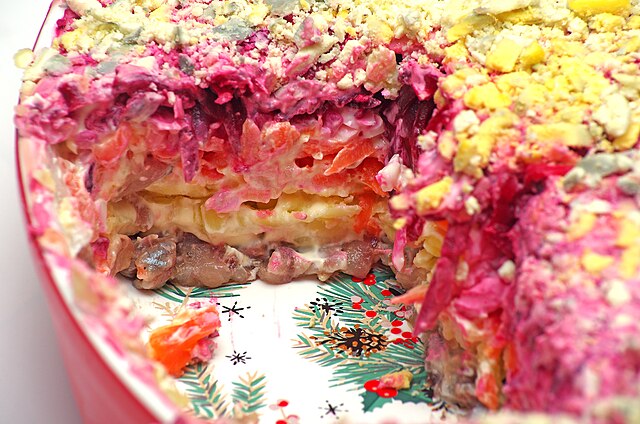
The other dish is a bit more dramatic. Herring Under a Fur Coat is a layered salad made with herring, potatoes, carrots, beets, onions, and eggs, all topped with a thick coat of mayonnaise. Don’t look for fur in the salad—it’s the beetroot layer that blankets the herring, giving it that deep, earthy flavour and brilliant colour.
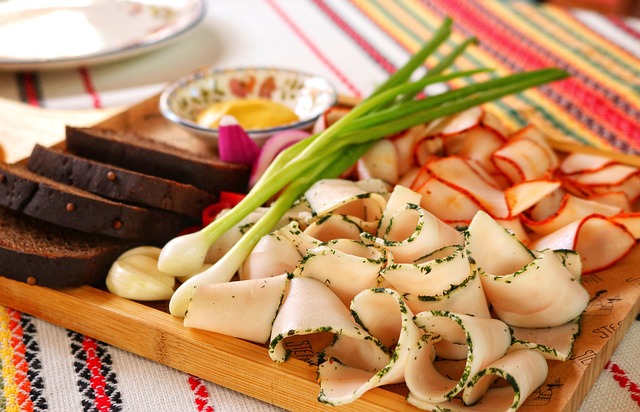
Mama is marinating the duck for roasting. She’ll also make pirozhki and a Napoleon cake. Papa’s only task? To bring vodka, salo, and a bottle of champagne to pop open at midnight.
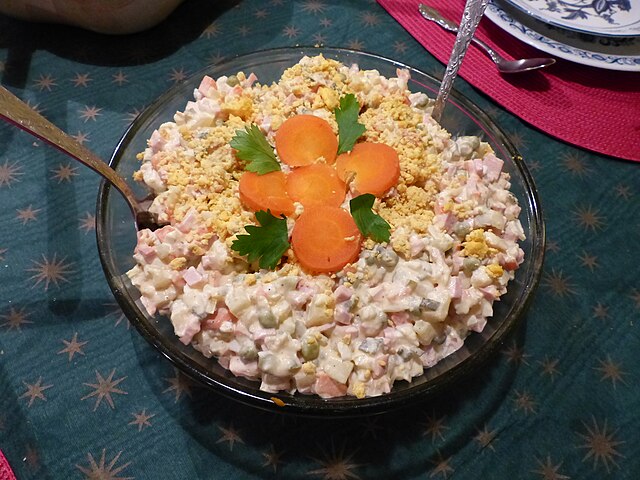
Olivier Salad - Photo: Dr. Bernd Gross
Harring Under Fur Coat - Photo: Pannet
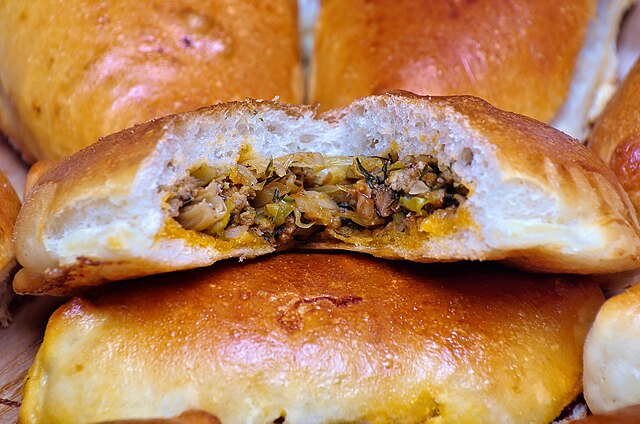
Pirozhki - Photo: Pannet
Salo - Photo: TetyanaUS
New Year’s Eve is all about a long, festive meal that stretches from evening well into the night. At the stroke of midnight, it’s tradition for the President of Ukraine to address the nation—something my parents never miss, and neither do I. The practice began in the 1970s with Brezhnev and, oddly enough, carried over into independent Ukraine. You’d think democracy would be more careful about stepping into people’s private moments. But never mind—like many families, we’ve always made room for the President at our table. One extra guest never spoiled the dinner.
Unlike previous years, when our New Year’s dinner table was full of relatives and friends, this time it’s just the four of us. Still, the TV keeps us rooted to our seats, just like always. Right after midnight, the channels flood with festive shows—concerts, comedians, dancers, variety acts. The Blue Light is still on this year, and we’ve been looking forward to it. The screen fills with famous faces, old songs, and plenty of cheesy humour. My parents love it—it’s a tradition within a tradition, one we never skip.
I’ll be staying in Mariupol for another two weeks, through Orthodox Christmas and New Year, which fall about two weeks after traditional Christmas and the Roman New Year.
Papa will join work on the first working day after New Year. It is an international humanitarian organisation, known as a humanitarian NGO, the kind that helps war-affected people meet their basic needs. I call it a war, but humanitarian NGOs refer to it as a conflict, in line with their principles of neutrality and impartiality.
I had a happy time in Mariupol, but I wasn’t sad to return to Kyiv either. Katya is here—I missed her.
I spoke to Okello yesterday for the first time since we met before Christmas. He called to share the news that the Minsk II Agreement, signed a week ago, had been endorsed by the UN Security Council. I told him about the cautious optimism Mykyta shared last night about the possibility of the war coming to an end.
In typical Okello fashion—blunt and undiplomatic—he dismissed that optimism. He pointed to a similar resolution from 1948, when the UN Security Council called for a ceasefire, demilitarisation, and a referendum in Kashmir. Nearly seven decades later, none of it had materialised.
To make his point, he compared Kashmir’s three measures to Minsk’s thirteen, noting that unlike the Kashmir Resolution, Minsk doesn’t even set out a sequence for implementation—making it even harder to realise.
Okello poured cold water on my excitement about the possible end of the war. Grumpy as ever, he finds fault in almost everything! Talking to him would be much more pleasant if he just let an emotional statement pass once in a while—without subjecting it to a logic test. Anyway, I still hope Mykyta is right. Maybe we really are seeing a bit of light at the end of the tunnel.
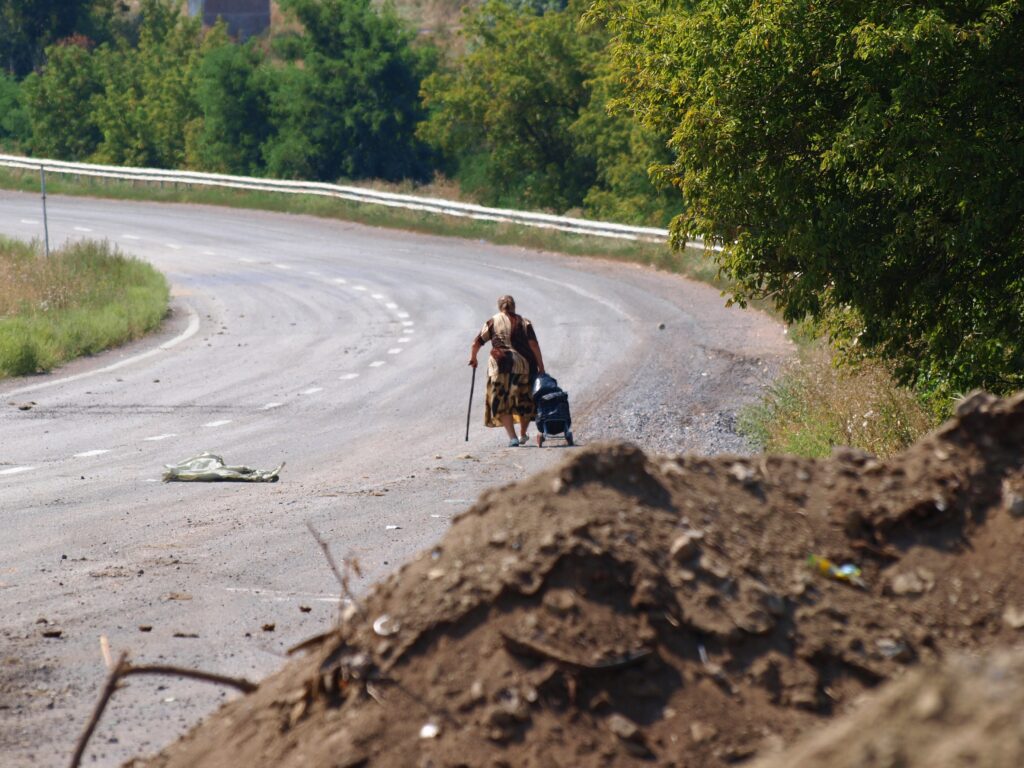
Photo: Arkadii Radkivskyi, License MoD Ukraine, Link
_(26833450660).jpg)
Very exciting news has come from Mariupol! A new entry–exit checkpoint opened across the contact line at Marinka, near Mariupol. Until now, the only crossing between government- and separatist-controlled areas in was at Stanytsia Luhanska in Luhansk Oblast, where civilians traversed a fragile wooden footbridge over the Severskyi Donets River. That bridge, located in Luhansk Oblast, posed major risks—people braved shelling and gunfire just to cross it.
The news spread quickly, and within days, long-separated families began planning visits. A week later, Grandpa called using Papa’s phone. The whole family is now in Donetsk—except for me, of course. Though the checkpoint crossing took a long time, everything went smoothly otherwise.
I can’t wait for my chance to visit Donetsk. Papa mentioned there’s a bus service on both sides of the crossing point. However, there’s still a 2–3 kilometre stretch of no man’s land that I’ll have to walk
between the government-controlled and separatist checkpoints. I don’t mind the walk. I told Grandpa I’d be coming next month during the Easter vacation.
I keep counting the days. I’ve set a date with Igor; he’ll take a three-day leave from his military duty. I bought him a good razor and cartridges—I never liked the beard he grew.
My ticket’s booked. I’ll take the night train to Mariupol.
My excitement about the journey to Donetsk made me forget all about the discomfort of the 19-hour overnight train ride to Mariupol. I rested for a day at home before heading to the Marinka entry–exit checkpoint. Papa drove me there early in the morning before heading to the office, and Grandpa was waiting on the other side. The crossing took around two hours. Poor Grandpa—overly excited—had arrived much too early and waited the whole time. But for someone who had waited more than half a year for this moment, a couple of hours meant nothing.
We talked non-stop on the bus to Grandpa’s flat, just like in the old days when he used to take me for walks in the park, holding my hand. It’s been nearly eight months since we last saw each other, and a lot has changed in me since I started studying at KIMO. But whether I was a toddler or a teenager, Grandpa has always been fun to talk to. He’s like a chameleon—effortlessly adapting to the moment. When I was little, he’d dive straight into my imagination; as a teen, he somehow read my thoughts. And even now, as a KIMO student, he knows just what to say to keep me engaged.
I spent most of those three days at my parents’ flat, which was vacant. I only went to Grandpa’s place for dinner, sleep, and breakfast—then headed back to my parents’ place, where Igor would meet me.
Igor stayed with me in the flat—something I couldn’t have imagined a year ago. I cooked lunch for him, and we watched movies on the laptop, took walks in the park, and had coffee at our favourite café. Those three days passed in the blink of an eye. They were the happiest of my life. Oh, and I shaved his beard—he didn’t resist at all. We made plans for my next trip to Donetsk, which would be in three months—Igor said he wanted me to stay for a full week that time.
Coming back to Kyiv was much harder this time. Katya had been eagerly waiting to hear every story about Igor. She brought two bottles of Nalifka—cherry liqueur her father brewed at home in Rivne. Tonight, the three of us—Katya, Mykyta, and I—are going to get wild, like teenagers hiding in a neighbourhood corner with a bottle, laughing too loud, saying too much, celebrating life.
Katya said her father’s Nalifka was far stronger than anything you’d find in a store. Strong enough to knock sense out of three adults, she warned with a grin. We walked toward the Alley of Landscape, picking up cheese, salami, dried fish, and disposable glasses along the way. At the Alley, we found a gentle slope that led us to a wide patch of green—lush grass, tall trees, and thick bushes bursting with colour.
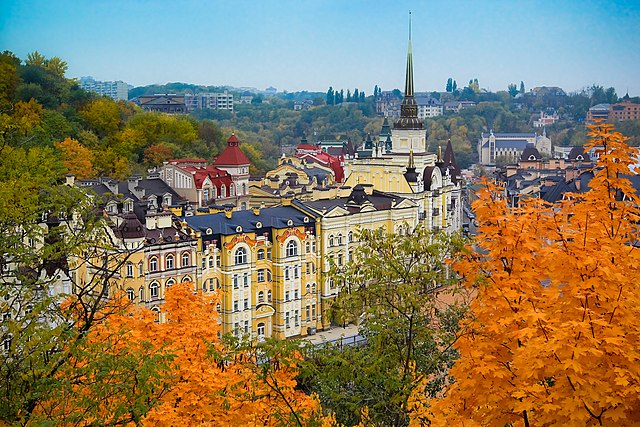
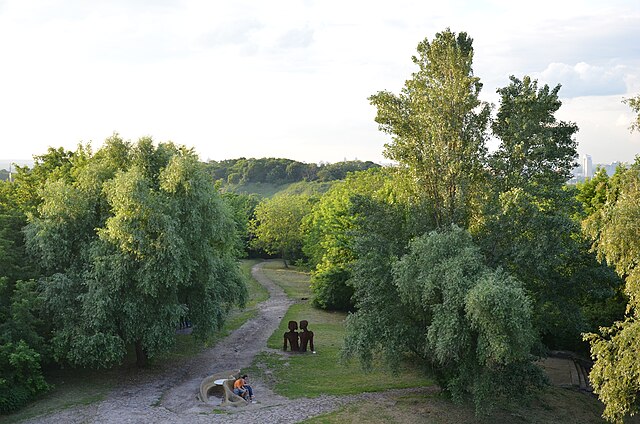
Alley of Landscape - Photo: Elena Zarubina, Lincese link
Photo Kiyanka, License link
Photo: Zephyrka
As the sun slipped lower and the light began to fade, the whole place seemed to wake up. Laughter rang out, voices overlapped—mostly young people, sprawled out on blankets across the grass. Coolers were cracked open, snacks passed around, someone was already strumming a tune on a guitar. Small groups formed their own little worlds, stories spilling out between sips, jokes rolling into giggles, drinks clinking softly in the background.
When the darkness finally settled in, fairy lights blinked on in the trees, throwing a gentle glow over everyone’s faces. The sky above us turned into a quiet sea of stars. We drank till the bottles ran dry—tipsy, full of laughter, wrapped in the warmth of each other’s company.
Mykyta, the least drunk among us, shepherded us into a taxi, making sure we got home safely. I was far too intoxicated to bother changing my clothes. The only thing I remember is rushing to the bathroom, then collapsing onto my bed and falling into a deep, dreamless sleep.
A loud banging reverberated through the room. It was morning—I could see that much—but I had no idea what time it was. The knocks kept coming—sharp, insistent. Then a voice. Male. Most likely the dorm warden. He was shouting for us to open the door.
I was still groggy, my mouth dry, head heavy from the drinks the night before. I got up, pulled on my jacket, and walked barefoot to the door. Katya followed. I didn’t even ask who it was.
When I opened the door, the warden was standing there, flanked by five people in dark uniforms. Two women, three men. All in black. Some wore jackets with insignia on the sleeve. Others had no visible badges—just stern faces and black gloves. One of them held a folder. Another had a small camera clipped to his chest.
They didn’t say much. The two women stepped forward and grabbed me by the arms. One on each side. Their grip was firm and practiced. The men stepped in to block Katya. One of them extended an arm across the hallway, preventing anyone else from getting close.
Students from the other rooms had come out. Some were still in their pyjamas. No one said anything.
Katya started shouting. She was asking what this was about, who they were, and where they were taking me. One of the women told her to stay back. The rest said nothing.
They were hauling me out barefoot. Katya rushed back into the room and returned with my sneakers. She crouched as I stumbled forward, trying to wedge them onto my feet while I was still being dragged. One slipped on halfway, the other fell. She tried again, her hands trembling, pushing the heel in with her thumb before they pulled me out of her reach.
I was half-shod by the time we reached the stairs. They didn’t stop. I was pulled down two flights, stumbling over the rubber soles now loose beneath me. In the parking lot, two vans waited. Katya followed, barefoot, no longer shouting—just pleading with her eyes. They shoved me into the van. Two women sat on either side, pinning me in place. As the engine started, they cuffed my wrists and blindfolded me with a strip of black fabric. The last of the light disappeared.
My hands were cold in the cuffs, fingers twitching with panic. I focused on the hum of the engine, the subtle jolts of the road beneath us, trying to grasp some sense of time—minutes? Hours? It was impossible to tell. There was no way to see where they were taking me, only the occasional sharp turn, a pause at what might have been a traffic light. I tried to concentrate on something, anything to ground myself, but my mind kept racing—would I be interrogated, or worse? But they were police, I told myself. State officials. They wouldn’t kill me. Not like this. Not without a reason. Still, the knot in my stomach wouldn’t loosen.
After what seemed like hours, the van finally stopped. The doors swung open, and I was dragged out, my feet stumbling across the cold ground. A sharp gust of cold air hit me. They yanked off the blindfold and removed the handcuffs, but before I could make sense of where I was, I was shoved forward into a dimly lit space. The air was thick with dampness. A single light flickered above, casting weak shadows, and a tiny window high up on the wall let in only a sliver of fading sunlight. The door slammed shut behind me, locking me into the silence and the cold.
On one side of the room was a narrow metal bed, cold and uncomfortable, with a thin blanket folded at the foot. On the opposite wall, a toilet pan sat uncovered, exposed, with no partition for privacy. Next to it, a rusted tap trickled into a cracked basin.
The day passed without any visit from anyone. That night, they brought in food—plain soup and a slice of bread. The food sat in front of me, untouched for hours. Then I ate.
I could barely sleep that night. In the morning, they took me to another room. It was bare—just the chair I sat in, a metal table in front of me, and a single bulb hanging from the ceiling. The air was damp and metallic, colder than the cell. Somewhere beyond the walls, a low mechanical hum echoed—maybe a generator, maybe something else.
Bootsteps scratched across the concrete floor. Two men stood in front of me. One was tall, broad-shouldered, arms crossed, his face blank. The other was shorter, heavier. He moved slowly around the table, taking a wide arc, his boots deliberate against the ground. Neither spoke.
“You’ve been to Donetsk recently, haven’t you?” the tall one asked.
I hesitated, my throat dry. Yes, I visited my family.
The shorter one scoffed. “Family? Or someone else?”
I didn’t answer. I looked away. I could feel his eyes burning into me.
“Igor, isn’t it?” he continued, stepping closer. “You spent three days with him. What did you two talk about?”
I hadn’t seen him in months, I replied, my voice barely steady. We just caught up. Nothing more.
The shorter one leaned in. “Caught up? A separatist soldier, and all you did was catch up?”
Before I could respond, the tall man slammed his fist on the table. They sent me back to my cell.
The next hours passed in silence. Then more hours. I stayed in the cell, lying still, watching the light rise and fall through the small window. No one came.
I kept thinking about the questions. About Igor. About what they already knew.
Maybe the interrogation was just a formality—something they had to check off before whatever came next. Maybe they weren’t looking for answers. Maybe they already had them.
The fear didn’t fade. It only changed shape. I started imagining outcomes. Would they charge me? Detain me here forever without a trial? Make me disappear? Every sound outside the door made me sit up, every silence felt heavier than the last.
It was like waiting for something you couldn’t prepare for—something you might not even understand until it was already happening.
On day three, they took me back to the same room. This time, a woman was waiting. Her face was expressionless, cold.
“Masha, why make this difficult?” she said softly. “We know who Igor is. He’s a known separatist fighter. All we want is the truth. Tell us about his comrades—locations, operations.”
I shook my head. I don’t know anything. I’m not involved in any of that. I went there because I missed him.
She sighed and motioned to someone behind her. A thick file landed on the table in front of me. She opened it slowly, turning page after page.
“We have photos of Igor. Photos of you. You think we don’t know? You’ve crossed the line, Masha. Tell us what he’s involved in. Otherwise, we’ll have to take other measures.”
My heart pounded in my chest. I’d heard stories about what those “measures” were. The room felt colder, the concrete beneath my feet sending chills up my legs. That night, they left me a small piece of bread and a cup of water—nothing more.
I kept marking the days on the wall. On the fourth day, they took me back to the same room.
This time, they laid the folder open on the table and began pulling out photos—Igor, in uniform, holding a rifle. Another of me, crossing the checkpoint into Donetsk.
“Look at these,” the woman said. “And tell me again that you know nothing.”
I shook my head, tears stinging my eyes.
I just wanted to see him. I swear, I don’t know anything about operations.
“You could have a future, Masha,” one of the men said. “You’re smart. A student at KIMO. But you’re throwing it all away for some separatist thug. Is that what you want?”
I haven’t done anything wrong, I muttered, my voice barely above a whisper.
“Enough, Masha,” the stocky man said. “We know you’re hiding something. Tell us about Igor’s unit.”
I swear, I don’t know anything, I pleaded.
“Loyalty to a separatist?” the other man sneered. “To a criminal? Is that what you’ve chosen?”
I’m not involved in any of this! I protested, but my voice was weak.
He leaned in slightly. “Do you think anyone will believe you?”
By the fifth day, their tone changed. The threats stopped. Now they tried to reason with me.
“Masha, you’re young,” the woman said. “You have your whole life ahead of you. Just tell us what you know, and this can all be over.”
I’ve told you everything. I don’t know anything.
She sighed. “You think the world will care if you disappear? You’ll become just another number. Tell us about Igor, and you can go back to your studies.”
I looked at her, my vision blurring from exhaustion.
I don’t know anything about his military activities, I said, my voice shaking.
Her face hardened.
“That’s a shame,” she said, her voice now cold.
I was taken back to the cell. An officer in plain clothes had just arrived. He told me to put on my clothes—not the prison-issue sweatpants and oversized shirt I had been wearing for days, but my own clothes. Folded on the chair. My jeans. My jacket. The ones I had worn the morning they took me.
My hands shook as I dressed.
Then they blindfolded me and took me out, guiding me down a corridor. The ground changed under my feet—tiles, then something hollow, like steps. I caught a trace of fresh air—I felt I was walking outside.
Maybe that was why they had brought me out. Maybe this was where it ended. The place people go when their names are no longer spoken. A sharp wave of fear rose—thick, choking. What if this was my last day, and no one even knew?
I thought of Mama. The way I had snapped at her. Ignored her calls. Rolled my eyes when she worried. I had argued just to win. Left without hugging her. I had rarely told her I loved her. I just wanted one chance to say it. I didn’t want to die before she knew how much I loved her.
My stomach cramped. A wave of warmth spread through my thighs—slow, hot, humiliating. The urine seeped into my jeans, clung to my skin. I couldn’t stop it. I didn’t even try. My body knew something I didn’t.
After a few minutes of walking in open air, it felt like I had entered a different building entirely. They led me down a staircase. A flicker of hope stirred. Whatever they were planning, it wouldn’t happen on an upper floor. That wasn’t how these things were done.
The hope grew as we walked through a long corridor. The air there was cleaner. The floor beneath us sounded softer—wooden tiles, maybe even a carpet. I heard a door open, and I was nudged gently to the left. They guided me into a new space and lowered me into a chair—upholstered, with soft cushioning. A sofa, maybe.
The door shut behind me. Quiet. Had the person who brought me here left?
A heavy voice, softened into calmness, came from across the table where I had been placed.
“How do you know Ivan Alekseevich?”
I paused for a moment. It took me a second to realise he meant Uncle Vania.
He’s my grandfather’s friend, I replied.
“How good of a friend is he to your grandfather?” the heavy-voiced man asked.
Grandpa and Uncle Vania fought together in the Afghan war, I said, trying to sound confident.
“Listen to me, young lady—what we do here is not for fun. We do whatever is necessary to ensure the security of the State and its people. Do you understand what I mean?”
I murmured yes, as my voice began to choke.
“My men will drop you near your university today. I want you to understand this very clearly—whatever you’ve seen or heard here, whatever you’ve experienced, you cannot speak of it to anyone. Is that clear?”
I broke. The sob came before I could hold it back.
I understand! I cried out. I won’t say anything. I promise—I won’t. Never.
“I will repeat this only once—we are at war. We will take whatever measures are necessary to protect the security of the State. For your own sake, I advise you to remain completely silent.”
The man paused, then rang the bell.
I heard the door open again. A man took hold of my arms and guided me back through the corridor, down the staircase, and out into the open. I was left standing there for about ten minutes.
There was the crunch of tires on gravel, then the faint creak of a door opening. A moment later, someone took my arm and guided me forward, helping me into the back seat. I could sense a woman sitting beside me.
The car came to a complete stop after some time—maybe forty-five minutes, maybe an hour, or even more. The woman beside me removed the blindfold, opened the door from the inside, and gently pushed me out. The car drove off immediately.
I had no idea where I’d been dropped. I’d never been here before. To my left, a highway; to my right, what looked like a forest. I had no phone, no wallet—nothing. My first instinct was simple: figure out how to get back to KIMO.
I stopped a man who was walking briskly and asked him the name of the place. He gave me a sharp look, paused for a moment, and said, “Babi Yar.” Then he walked off, quickly, without another word.
My skin tightened. Tiny bumps rose along my arms. The air felt cold against my skin, like a warning. This was where the Nazis slaughtered tens of thousands of people. And of all the places in Kyiv, they dropped me here.
I stopped an elderly woman and asked for directions to KIMO. She said it was only a twenty-minute walk and gave me a few simple turns to follow.
Twenty minutes or twenty hours—it didn’t matter. I kept walking.
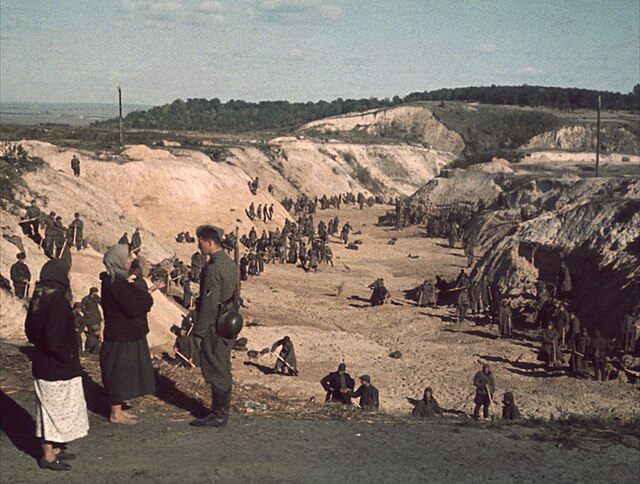
October 1, 1941. Soviet POWs covering a mass grave after the Babi Yar massacre. Photo Johannes Hähle