CHAPTER THREE
Where Water Rots, the Hyacinth Blooms
I talked to Grandpa and Ira. Donetsk is being heavily bombarded by forces from the government-controlled areas. More and more people are leaving their homes. People are fleeing to government-controlled areas in large numbers. Some are even taking refuge in Russia.
Ira has not seen Igor for six days. No calls either. All bad news from Donetsk.
The news from Volnovakha is rather promising. Sasha adapted to his new school. It is only a 15-minute walk from the dacha.
The boys’ toilet has four pans in a row, without any walls or partitions between them. Why do toilets in the village always have to be problematic?
Other than the toilet, Sasha did not complain about the school. Yesterday, he got a fancy backpack made in the USA from a humanitarian organization that supports displaced populations.
The same organization distributed stationery to students the previous week. Sasha did not take them that time. He told me he was not a beggar, and he had no intention of standing in line to collect stationery. I guess the backpack was too much of an allurement for the little kid to resist. I wish he had never had to face the test.
Papa applied for more than a dozen positions in Mariupol. The most promising one is the driver’s position at an international non-government organization in Mariupol. That’s the organization where Uncle Vlad works in Kyiv. They also have a large field office in Mariupol. They provide humanitarian assistance to the people affected by the war.
Uncle Vlad knows the hiring manager very well. However, he will not push Papa’s case. His organization does not tolerate undue interference in the recruitment process.
Instead, Uncle Vlad wrote a letter of recommendation for Papa. He will also have a long chat with Papa a day before the interview to familiarize him with what he can expect during the interview.
It has been two weeks since we met Okello. I must say I developed a fascination with talking with him. A strange man who talks about complex political issues in his made-up ways, like a child who has never read a book on political science. And yet, he makes sense—more sense than what I hear from my lecturers at KIMO.
My mind has been restless, circling back to the one question I want to ask Okello: Why did Igor volunteer for the war?
He knew exactly what he was signing up for—a mission whose success is measured by the number of lives taken. You can call them enemy soldiers, if that helps you sleep at night, but they are still human beings, made of flesh and blood like the rest of us. I never fully believed Igor’s explanation. There’s something deeper—something he hasn’t said.
I haven’t told Katya that Igor joined the separatists. I know I should have been honest with her. But I’m afraid of the consequences. Will she see me as a traitor? Will she pull away—maybe even ask to switch roommates? I don’t have the courage to risk losing her friendship, or Mykyta’s. Not now.
I sent a text to Okello, asking if he’d be free to chat next Friday after work. He replied almost immediately—yes. Okello is a seasoned humanitarian, which reassures me. I trust him to keep what I say about Igor in confidence.
I told Katya I’d be out for the evening to attend Uncle Vlad’s son’s birthday—a story I made up. I took the metro to a station called Dnipro. From there, it wasn’t hard to find the Dnipro River Station, where we had agreed to meet.
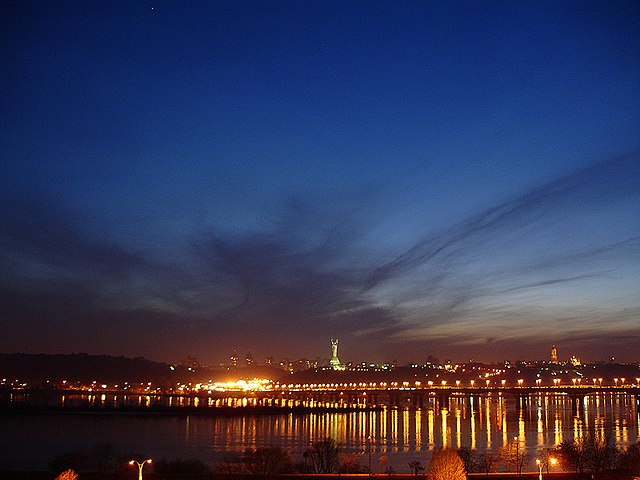
Dnipro at Kyiv - Photo: Anton Molodtsov/Wan Kenobi
The atmosphere at the Dnipro River Station was electrifying. Small kiosks and restaurants lined the riverbank, forming a casual promenade. Between the river and the kiosks, dozens of bean bags were scattered across an elevated concrete platform, where people lounged with effortless ease. I spotted Okello; he had already reserved a bean bag for me.
Judging by the beer glass, Okello must have arrived some time ago. He offered me a drink and brought me a cup of coffee. I took a moment to orient myself to the surroundings.
Loud chatter rose from every corner—mostly from young people. The view of the Dnipro River was mysteriously captivating. One of the bridges was lit with blue and yellow bulbs, reflecting the colours of the Ukrainian flag. Light and shadow danced on the river as the bulbs blinked in a soft rhythm, their glow shimmering across the water.
I stood for a moment to take a few pictures to send to Sasha. I couldn’t remember the last time I’d seen a more beautiful view—maybe in Crimea. Sasha would be amazed.
I didn’t take a picture of Okello. The photos would go to Mama’s phone, and I didn’t want her to know about Okello just yet.
Despite all the respect I had for him, I wasn’t ready for my parents to find out that the first person I’d gotten close to outside my KIMO circle was a Black man. My parents had grown up with the same prejudices Soviet society held against Black people. I would talk about Okello when I visited them in the New Year.
An elegantly dressed girl, probably in her late teens, was walking along the top of the wall that separated the food court from the riverbank. The wall was quite high. She was almost certainly trying to impress her friends. Okello watched her for a moment, then slowly turned his face back toward me.
Okello
You know, freedom means standing alone—standing alone without fear, and with the guts to face the consequences.
I
But that girl is being stupid. Is the attention she’s getting really worth the risk? Can you imagine the humiliation—and the injury—if she falls off that wall?
Okello
But what about the joy of doing exactly what you want to do?
I
Is the joy that important?
Okello
What do we live for, if we keep cutting joy out of our lives for one reason or another?
I
Why don’t you go for a walk on the wall? That’ll make you happy.
Okello
My mind is already walking on the wall. I like to tell myself I’m not doing it physically because it’s risky. But honestly, even if it weren’t risky—I still wouldn’t be up there.
I
Because of what?
Okello
A middle-aged man with a big tummy, a Black man, walking on the wall—what would others think of me?
I
You care that much about what other people think of you?
Okello
I wouldn’t admit it, of course. I’d just say walking there is risky. We lie to ourselves like that all the time. We’re quick to accuse the world of taking our freedom, slower to see how much we surrender to the noise inside our own heads.
I
Isn’t it okay to give up a little freedom if it helps you fit in—be a bit more socially acceptable, you know?
Okello
On the surface, it sounds reasonable. But it’s a slippery slope—you don’t know where to stop. At some point, the you inside you dies, and you don’t even notice. You transform into a beautifully decorated zombie, walking through society, carrying out thoughts you let others plant in your head.
A shadow moves through me, sudden and heavy. Am I already dead inside? Why didn’t I send Mama a picture of Okello? I like him. I admire him. I enjoy being around him. If the Soviets had prejudices against Black people—and my parents inherited them—that’s their problem, not mine. The girl on the wall—the one I thought was stupid—she’s more alive than I am.
Okello
You look like you suddenly drifted into some kind of shock or sadness. Did I say something that offended you?
I
No, no, no. Something completely random just hijacked my head. Can I take a selfie with you?
I took three selfies with him, the bridge lit in yellow and blue in the background. Okello looks grumpy in one—which, honestly, is his most natural expression. His eyes are closed in the second, and he has a fake smile in the third. Okello chose the third one, and I sent it to Mama’s phone for Sasha.
Just like last time, Okello began showing off his Soviet history skills—this time about the river station from the 1950s and the Kyiv Grain Elevator nearby. He went on for a while about post-war Kyiv infrastructure and Soviet grain storage plans. Then he noticed I wasn’t really into it—and stopped.
Okello
So, tell me—why did you decide to talk to me?
I
Can you explain one thing to me, Okello? When a child punches his classmate, his teacher and parents reprimand him. And when he tries to explain why he did it, he’s told that the reason doesn’t matter—the act of punching is wrong, no matter what led to it. That’s how he’s raised, by his parents, his neighbours, by society itself.
But killing a man—that’s a million times more serious than a punch. And yet, when that same child grows up, he’s expected to go to war and kill another man—or as many men as possible. How does something that’s wrong on a small scale suddenly become right when multiplied by a million?
Okello
There may not be a straight line between punching someone and killing in a war. What if the man joined because his town was under attack? You could say he was trying to protect his people, not abandon peace. In that light, he might still be the same person—just forced into something else. It’s hard to judge without context.
I
This is about my personal life. It’s sensitive, and I’d expect you to keep it confidential.
My boyfriend, Igor… he joined the separatist camp. He finished his three months of training, and now he’s been deployed to active duty.
He volunteered.
And—this part is hard to admit—unlike your example of a peaceful man defending his people… this isn’t that. It was his side that started the war.
Okello
I’m really sorry to hear that, Masha. That must be difficult to carry. Did he ever tell you why? What made him decide to go to war?
I
He said what you’d expect to hear on Russian media—about protecting Russian ethnic identity, language, culture… all of that.
Even if I try to believe him, I still can’t understand how someone who used to avoid violent movies could now be ready to kill.
To kill another terrified, confused man—someone who probably didn’t choose this war either.
Okello
Don’t try to make sense of why Igor joined the war. You won’t find a convincing reason. Instead, look at the bigger picture. Think about hundreds of millions—maybe even billions—of people like you and me, who fuel war, justify it, tolerate it, and quietly condone it.
I
So we’re all guilty, is that it? Even the ones who didn’t pick up a gun?
Okello laughed. He asked if I wanted another cup of coffee or a beer—I said no. Then we stepped away for a moment and came back with a fresh glass of beer in his hand.
Okello
There are three forces in today’s world that keep producing war: the centralization of ideas under the banner of nation-states, capitalism, and fiat currency.
In Uganda, we say, ‘Where water rots, the hyacinth blooms.’ It’s this plant that shows up when the water’s gone bad. Looks nice—bright purple flower—but it spreads like crazy, chokes the pond, and kills everything underneath.
That’s how I see it. The way nation-states, the global economy, and modern money have evolved—war isn’t an accident anymore. It’s the natural outcome.
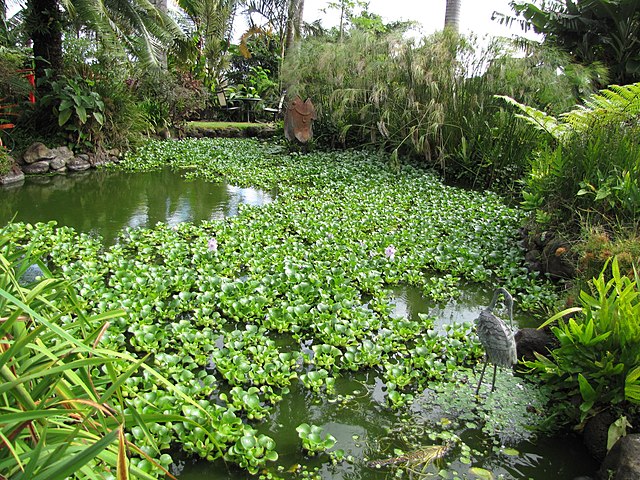
Photo: Forest/Kim Starr
I
Okay, but what do you mean by “centralisation of ideas”? Like, in real life, not in theory.
Okello
Take God as an idea. It’s arguably the most powerful idea humans have ever invented.
For thousands of years—until the rise of monotheistic religions—our sense of sacred order came from a decentralized, natural world. Now contrast that with a single, omnipotent power that dictates everything.
That’s what I mean by the centralization of ideas. God no longer lives in mountains, trees, and rivers. Now, everything must have a master.
Even the sky. Even your soul.
I
What do you mean, God lived in the mountains, trees, and rivers?
Okello
That’s a figure of speech. When humans lived as hunter-gatherers, they found spirituality in nature and animals. With the rise of agriculture, people began turning to fertility gods, appealing to divine forces for rain, harvest, and protection.
You can see from that how our spiritual beliefs once mirrored our needs in the world. And because our needs were diverse, so were our gods.
I
Okay, I think I’m following. You’re saying that over time, spirituality got centralized—turned into the idea of a single, absolute power. But how did that actually happen?
Okello
Mostly by force. God, as an idea, began to become centralized about two and a half thousand years ago—in a narrow corridor stretching from North Africa to West Asia, across ancient Persia, the Levant, and Arabia.
And maybe it made sense there, if you follow the mirror principle I mentioned earlier. Those were regions of strong, centralized empires—like Egypt and Persia—ruled by absolute monarchs, with laws, bureaucracies, and systems built to enforce order from the top down.
The societies were complex, and the climate was often harsh. Stability required control. And over time, that control in the physical world mirrored itself in the spiritual world.
One god. One ruler. One truth.
I
You know, my grandparents—on both my mother’s and father’s sides—did not believe in God. My mother does believe in God, though. And when I hear the word God, I understand it as a single, omnipotent power.
Okello
That has been the conviction of people from this part of the world for over a thousand year. Anyway, going back to the point – Zoroastrianism and Judaism were among the earliest monotheistic traditions. Over time, Judaism gave rise to Christianity and Islam, each building upon and reinterpreting the monotheistic framework in their own way.
I
When you said it was imposed mostly by force, did you mean how empires—like Rome, later used religion to unify and control their people?
Okello
Yes. The Edict of Milan legalized Christianity in the Roman Empire. Then came the Edict of Thessalonica—it made Christianity the official state religion. Everyone under Roman rule was expected to follow one centralized faith.
As the Roman Empire began to disintegrate, Arab empires rose and spread another centralized religion—Islam—across a vast landscape, from India in the east to Spain in the west.
Later, Spain and Portugal imposed Christianity across the Americas—from present-day Argentina to Alaska—with unspeakable brutality.
And when the British emerged as the global superpower, ruling lands from sunrise to sunset, they too carried Christianity into Africa and Asia—into places where it hadn’t yet taken root.
I
Okay, I think I got most of it. But I’m still not seeing the connection to war.
Okello
Monotheistic religions have played a powerful role in shaping nation-states. The nation state idea itself is only about four hundred years old. If you look at how national identities were formed in the early nation-states, you’ll see that religion was one of the strongest tools used.
When the Roman Empire began to fall apart, its fragments often built their identities around three things: a common language, a common religion, and a common enemy.
Take England and France—though technically, England is a kingdom, not a state. Still, each helped shape the identity of the other. For England, it was the English language, Protestantism, and the French as the common enemy. For France, it was the French language, Catholicism, and England as the common enemy.
That’s what I meant: when you centralise certain ideas—language, religion, enemy—into a national identity, you also create a recipe for endless war.
I
You say the centralisation of identity leads to war, but most European countries today are still nation-states—and they’re not at war with each other anymore. Unless, of course, we count the Balkans and Ukraine.
Okello
Europe stopped fighting itself after the Second World War, once it recognised that nationalist ideologies were the primary obstacle to peaceful coexistence.
Today, many of those same nation-states operate within a supranational framework—the European Union—which promotes a shared European identity over narrow nationalism. In some member states, national anthems are no longer played in schools, and religion holds no official place in this new civic order.
I
But what about the rest of the world? Do other regions also feel the need to move beyond the nation-state model? Or is the attachment to language and religion still too deeply rooted?
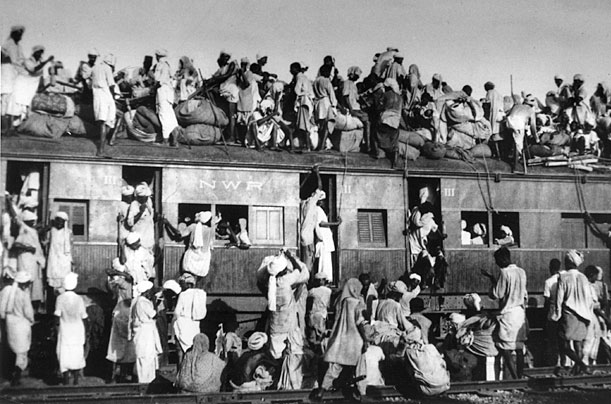
India 1947 - the largest migration in human history
Okello
It’s striking, isn’t it? Just as Europe is trying to move beyond its centuries-old nation-state ideology—towards a supranational structure —the rest of the world seems to be heading in the opposite direction.
Take India in a broader sense, for example. During decolonisation, it was in this region that a textbook case of nation-state formation unfolded—not in India itself, but in the creation of Pakistan. Three prominent Muslim leaders and thinkers introduced what became known as the ‘Two-Nation Theory’—the claim that Muslims and Hindus in British India were two distinct nations, each with its own religion, culture, and identity, and therefore each deserving a separate homeland.
That theory led to the formation of Pakistan—a country where Urdu, a language spoken by none of its major ethnic groups, was imposed as the sole national language, erasing linguistic diversity. Where the migration of 15% of its non-Muslim population to India turned Islam into a unifying identity, suppressing religious pluralism. And where a war over Kashmir gave it a common enemy in India.
A perfect mirror of how English and French national identities were built: a common language, a common religion, and a common enemy.
I
Fascinating. And that division eventually led to three wars between India and Pakistan, didn’t it?
Okello
Four so far—and the way things are going, there’ll likely be more.
You see the irony, right? No other land in history matched India for sheer human variety: over a thousand languages, every major religion under one sky, and ways of life that shifted with each bend of the river. People lived together for thousands of years. And now they can’t.
The three Indian men who shaped the ‘Two-Nation Theory’ were all educated in England. One was an English barrister, another had a Cambridge education, and the third was both—a Cambridge-educated English barrister.
You import an alien idea into a decentralised society—there will be a price to pay.
Centralisation doesn’t exist in nature. Nature flows spontaneously through decentralised ecosystems. It doesn’t suck energy from all its parts to store it in one place. But the moment you concentrate energy into a single centre; you gain the power to attack—and the weakness to be destroyed.
I
So you think people like Igor are just victims of these centralised ideas? That they don’t even realise what they’re doing?
Okello
In most cases, yes—they’re used as fuel to keep the fire burning.
When you tell your people that their nation is superior—because of race, religion, ethnicity, or whatever—you’re also implying that others are somehow less. That quiet sense of superiority can make you hate people living ten thousand miles away, people you’ve never met, know nothing about.
You’re fed a short, centralised narrative: that people of a certain religion are terrorists, people of a certain race are evil, people of a certain ethnicity are monsters. And somehow, that’s enough—to incite, support, or silently condone wars that kill tens of thousands, sometimes millions, of innocent people—men, women, and children.
.
I’d already skipped three calls from Katya. Now there was just a cold message: Let me know when you expect to be back. I replied: Half an hour. Then I turned to Okello and said I had to go. He offered to drop me at my campus—even though it was nowhere near his. I told him I’d take the metro. So we started walking toward the station.
On the way to the metro, Okello continued explaining why he believed the nation-state, by its very design, would keep generating wars. Prosperity or democracy doesn’t change that, he said—a country can be fair and free within its borders, yet monstrous beyond them. In his words, “Since World War II, the most democratic country in the world has also been the most violent. And a century earlier, the nation seen as the pinnacle of democracy was likewise the most violent of its time.”
Katya gave me a cold look when I got back to the dorm. After failing to reach me three times, she’d called Uncle Vlad—and that’s when she found out I’d made up the story about his son’s birthday.
Eventually, I had to admit I went to see Okello. But I didn’t want her to think I had a personal interest in him. So, I told her the truth.
The truth about Igor. The real reason I spoke to Okello without her.
Katya didn’t judge. She didn’t flinch. She just listened. Not like someone trying to decide if I was a traitor, but like someone seeing pain for what it is. I saw in her eyes something steady and kind, something that didn’t need words to be understood.
That moment stayed with me. It was the first time I felt what kind of friend she really was. The kind you can fall apart in front of and not feel ashamed. The kind who doesn’t ask you to be clean, only honest.
That’s when I knew—this girl, with her sharp edges and quiet strength, was going to matter to me. A lot.