CHAPTER ONE
Goodbye Donetsk
It was not like any other Sunday. Mama did not go to church. Grandpa rushed to our place early in the morning, uncharacteristically unshaven, letting down his usual, somewhat excessive sense of dignity. Papa did not complain about his breakfast. Sasha did not take Benichka for his morning walk. Igor broke his Sunday morning routine of visiting me.
A flat in the neighbourhood was hit by an artillery shell last night. Donetsk is no longer safe for living. We may have to leave for safety. Both my parents have spent their entire lives in this neighbourhood. Here, they played together as children, struggled with emotions together as teenagers, and lived together as adults.
Today, the opinion is split on whether to leave this place. “Over my dead body,” Mama said.
Talking about dead bodies, both of Mama’s parents rest peacefully in a nearby graveyard. They had short lives. Her father was a coal miner. Coal miners do not last long! The Soviets compensated the short lives with larger wages. When my paternal grandpa was earning 180 Rubles as an engineer, my maternal grandpa was bringing home more than 500 Rubles as a coal miner. Even my maternal grandma, who used to drive trams in Donetsk city, was earning more than 180 Rubles.
Mother told me she never allowed the different living standards to put a strain on their romantic relationship as teenagers. Papa tells a different story, though. He remembers every single detail my mother used to brag about, like her family’s summer vacations to Crimea riding in their brand-new Volga.
Papa too had yearly trips to Crimea, stuffed into stinky train wagons with strangers whose love for vodka and salo could easily match the commitment of a communist patriot. Papa finally got to ride in his family car. That, however, was a Zhiguli, not a sleek Volga—the one that Grandpa drove to our place this morning.
Mama visits her parents’ graveyard on every religious and social occasion, including May Day, Women’s Day, and Victory Day. In the godless Soviet Union, these three holidays, along with October Revolution Day and Defender of the Fatherland Day, were the biggest festivals.
The joys and gatherings of those festivals still remind Mama of the golden days she had with her parents. Visiting them on religious occasions, however, feels more like baptizing them in their graveyard. Her parents did not believe in God during their lifetimes.
Mama, bound by invisible threads of love and loss, feels an unbreakable connection to Donetsk through the silent whispers of her parents’ graves.
She made a heartfelt plea to stay in Donetsk. Grandpa overreacted. “Vasya was a great worker, the best coal miner of his time. He served his people; he served humanity. His life had meaning and purpose. I see nothing in his graveyard except for grass growing in spring and dying in winter,” said Grandpa, the old materialist.
Mama is stunned, tears welling in her eyes. “I didn’t want to hurt you, Luda. War does not know tears; it turns tearful eyes into stones. Run, while you still have tears left,” Grandpa continued.
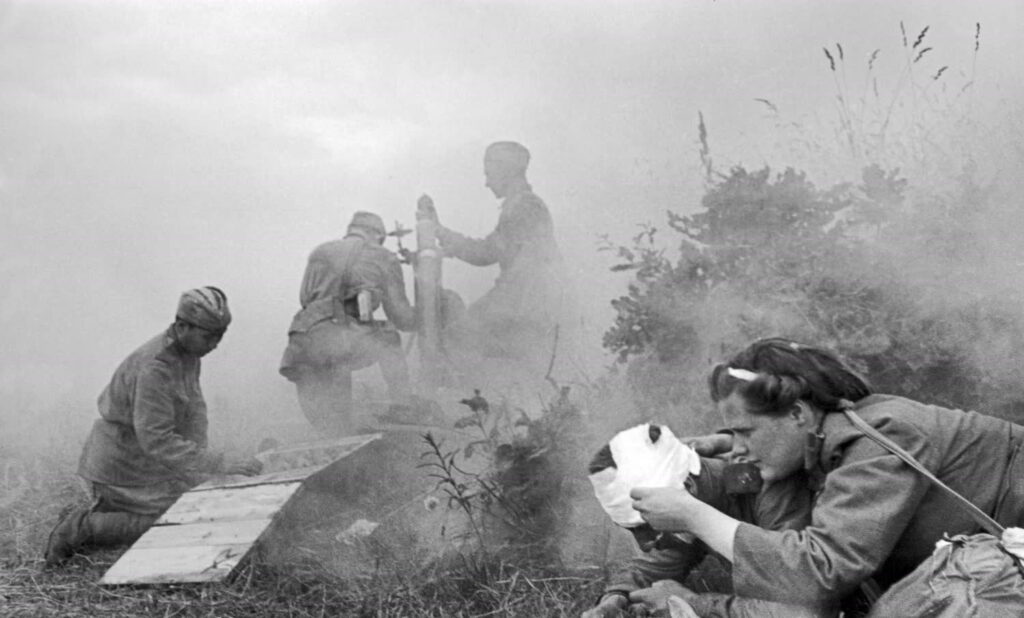
War is nothing new to Grandpa. The first child of his parents, Grandpa was only five when World War II reached Donetsk, then known as Stalino. His father perished in the Battle of Kursk. Grandpa remembers little of the two years of Donetsk’s occupation and liberation, except for his constant hunger and the vacant eyes of his mother.
Orphaned by Stalin’s sinister Holodomor scheme, his mother was condemned to a living hell by invisible forces. At fifteen, she toiled twelve hours a day in the oppressive heat of a steel mill, where she met her future husband.
Battle of Kursk: Photo Credit Yefim Kopyt
Her second child died a week after Donetsk was occupied. A few months later, her husband was conscripted to fight in the war and never returned. She suffered a stillbirth weeks after an injured soldier, returning to Donetsk, showed her the shoes he had taken from her deceased husband. Grandpa was the only treasure the universe allowed her to keep.
What an irony of life: a child whose own childhood was ravaged by war grew up to volunteer for war himself. Grandpa was not a professional soldier nor conscripted; he chose to enlist voluntarily in the Afghan war. It was there that he met Uncle Vania. Today, Papa and Grandpa are set to visit Uncle Vania to seek his advice.
Everybody in Donetsk knows Uncle Vania for one reason or another. To some, he’s still known as the ‘roof’ for his activities during the infamous criminal 90s. To others, he’s a philanthropist, an art lover, and a staunch promoter of local football.
Thanks to industrialists like Uncle Vania, Donetsk remains the crown jewel of Ukraine for its industrial prowess. Although Uncle Vania claims he has no political ambitions, very few businessmen in Donetsk wield as much political influence as he does.
Grandpa was Uncle Vania’s guardian angel during the Afghan war. Two ideologically different men from Donetsk went to war at two different stages of their lives for two different reasons, yet they had developed a friendship that was thicker than blood.
Grandpa, a dedicated Octobrist, Pioneer, and Komsomol, maintained a spotless image as a communist—a tall, handsome Slavic man who never left his home without a clean shave. He steered clear of all forms of addiction—smoking, excessive drinking, or even religion, which the communists deemed “the opium of the people.”
In stark contrast, addiction was the reason Uncle Vania found himself in Kandahar. Convicted of possessing illegal substances in Donetsk, he became an obvious candidate for military conscription. His training was minimal, limited to handling a rifle and throwing a grenade, before he was sent off to Afghanistan.
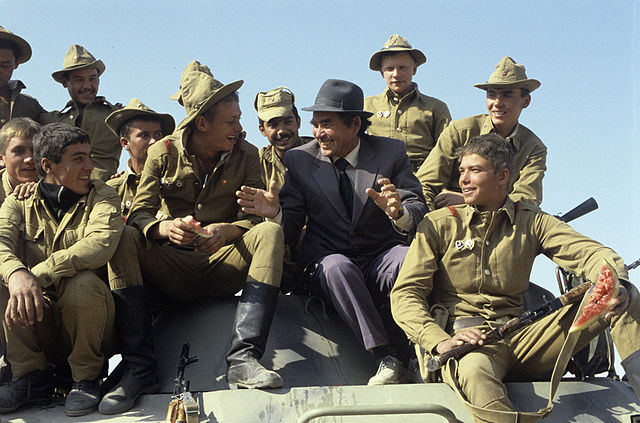
Returning from Afghanistan:Photo Credit Yuriy Somov
It is almost noon, and Benichka has yet to be taken out for his walk. My little brother Sasha is too scared to take him out alone.
Benichka, or Benedict Alexandrovich Petrov, the pitch-black three-quarters Labrador, became the newest member of the Petrov family when his adoptive father, Alexandr Nikolaevich Petrov, a.k.a. Sasha, refused to accept anything other than a Labrador for his nineth-birthday gift last year. Benichka was only six weeks old when he was separated from his half-Labrador mother and six other siblings competing for her milk.
Sasha finally gets me to drag Benichka to the park. It is a short trip—Benichka is quick, practically bouncing off the walls with the urgency of his morning call.
The park feels like an alien landscape to me. The benches are deserted. There is no young woman lounging on her man’s lap, no one showing off a flashy new skateboard trick. No violin serenades, no guitar strumming, and, heartbreakingly, not a single chess game in sight.
The park, usually a haven where old men, dedushkas, gather for their chess matches, is eerily empty. Rain or shine, this place used to buzz with life until the last sliver of sunlight disappeared. It is a place where old industrial workers, cheated by the ever-eroding purchasing power of their pensions, used to take refuge from the relentless hardships of home—strained conversations, unspoken grievances, and the quiet toll of years spent surviving.
Here at the chess corner of the park, dedushkas would come to bury their lost ambitions and make peace with their shattered dreams and wounded pride. It was where they forgot old scars and found a reason to keep going.
Here, they were the kings of their own games, not just pawns in someone else’s. Life sparkled in this place like the last soft glow of the day—gentle, fleeting, and unexpectedly beautiful.
Papa and Grandpa returned from Uncle Vania with crucial insights. Donetsk will remain engulfed in conflict for many years, and the situation will only deteriorate further.
Uncle Vania handed Papa a small piece of paper with the contact information of three separatist leaders, advising him to reach out if any issues arose in the separatist-controlled areas. He instructed Papa not to save the contacts on his phone or even take screenshots. In true Hollywood style, Uncle Vania gave Papa a small lighter and told him to burn the paper immediately after passing the last separatist checkpoint.
Mama’s aunt has a dacha in a village in Volnovakha Raion, about 50 to 60 kilometres inside the government-controlled area. Mama has already spoken with her aunt, and we will pick up the keys to the dacha later this evening.
The dacha gained importance in the ’90s during the economic turmoil that followed independence. Like many Ukrainians, Mama’s aunt was in survival mode, and the dacha became a lifeline, providing her with potatoes and melons.
Over time, the dacha fell out of favour as Mama’s cousins grew up and became economically self-sufficient. They hate the dacha; it reminds them of a painful childhood spent harvesting potatoes and eating them every day of the week.
Three decades later, the dacha is called to duty again. It will be our home until Papa and Mama find jobs in Mariupol, the largest nearby city still under Ukrainian control.
The initial plan was to leave right after sunrise to avoid drawing attention from the neighbours. But Papa doesn’t want to leave without withdrawing cash from his bank account. The ATMs are empty, and today is Sunday, so the banks are closed. He plans to withdraw all his Hryvnia first thing when the bank opens tomorrow morning.
Mama’s employer started to pay in Russian Rubles two months ago, which she kept at home. Papa will convert both Hryvnia and Rubles into US dollars or Euros, depending on what the black market offers.
As expected, Grandpa and Grandma are not coming with us. Papa and Mama did not put much effort into persuading them, either. These old souls still have some life left to live, but only if they remain in Donetsk. Uprooting them now, after seven decades of finding purpose in its streets and solace in its routines, would rob them of the fragile will that keeps their frail bodies moving.
Grandma battles severe Parkinson’s disease, and her pain is often unbearable. She jokes that if God, whom she does not believe in, intended for an artillery strike to end her life, He wouldn’t have placed her on this long, painful path she has been struggling with for years.
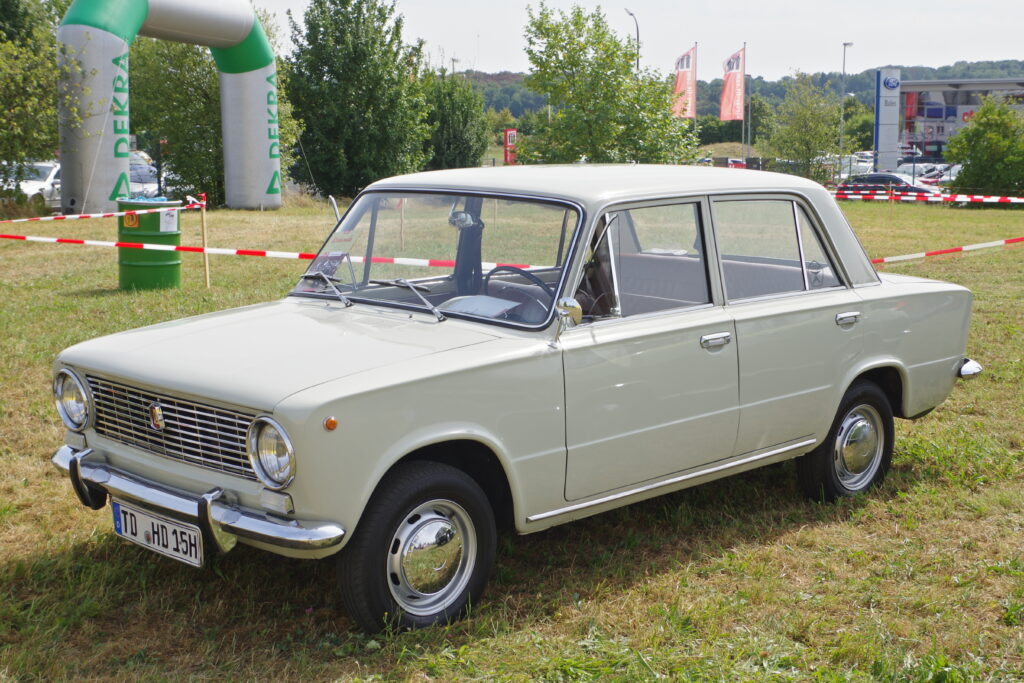
Zhiguli: Photo credit Berthold Werner
Mama is packing. The Zhiguli will have little space for luggage after accommodating four passengers and Benichka. Today is judgment day for every item at home, competing to prove its worth for a place in the car.
There was a time when Mama would yell at everyone, cook an inedible dinner, and spend a restless night if someone in the family broke a piece of her favourite dinner set. That dinner set is nowhere near the competition today. Nor is the two-meter stainless steel refrigerator that Papa bought with a consumer loan. Even the fine Dresden hand-painted vase, whose beauty Mama forced every visitor of the Petrov family to admire, couldn’t secure a spot.
The only items that have the privilege to be packed are those essential for the existence of the Petrov family. Birth certificates, IDs, bank documents, property titles, essential clothes, bed covers, and even the stupid pillows.
It’s also astonishing to see old things coming alive after years of resting on walls and in showcases without anyone paying attention to them. Sasha’s footprint at birth, Papa and Mama’s wedding photo, a photo of Grandpa receiving the Order of the Red Banner from Brezhnev, my high school graduation photo, Sasha’s copper-made gold medal from the Donetsk junior chess competition, and half a dozen photos from our trips to Crimea were unequivocally chosen.
Mama is carefully taking them out of their glass frames, wiping away her tears as they fall. If not for the war, I would never have realized how intrinsically these keepsakes and mementos are connected to our existence.
Mama is taking the Singer sewing machine along with her best dresses for special occasions. I’m starting my undergraduate studies at KIMO in Kyiv this autumn, and she plans to customize some of her old dresses to make me presentable among, what she calls, the elites at KIMO.
After Mama finished packing, we went to Grandpa’s place for dinner with Grandma. Mama brought all the meat, vegetables, and perishable items from our refrigerator. She quickly cooked what could be our last dinner together with Grandpa and Grandma.
I sent three texts to Igor, but they showed as delivered yet unread. While Grandma cuddled Sasha, I spent the entire evening checking every minute to see if the white delivery ticks would turn blue.
Grandma gave me a necklace with matching earrings, a 14-carat thin gold chain with a delicate pendant holding a sapphire stone. The earrings also have small pieces of sapphire stones. This is the most expensive jewellery set she has ever possessed. I’m going to KIMO, and I should be made presentable, that’s what Grandma told me while handing over her precious treasure.
On the way home, we stopped at three petrol stations to find fuel for our journey tomorrow. We also made a brief stop at Mama’s aunt’s place to pick up the keys to the dacha. By the time we finally got to bed, it was pretty late.
The house bell and my mobile phone rang simultaneously at around six in the morning. It was Igor. A tidal wave of joy swept through my heart, even though I had expected his call. It was one of those moments when your brain and heart don’t communicate, or when your heart simply craves an outpouring of emotion, regardless of what your brain knows.
Igor rarely comes up to the third floor; he usually just makes a missed call from downstairs. But today, he couldn’t wait.
I made him stand outside near the stairwell while I brewed some coffee. We took our cups to the backyard lawn of the apartment complex. I woke up Sasha to lock the door.
It’s the first time I’ve seen him in two weeks. He’s grown a beard, but the innocence in his eyes hasn’t faded, despite his induction into the kill-or-be-killed business.
He was just a bystander when the separatists occupied the Donetsk State Administration building. Today, he is one of them.
He’s in a three-month military training camp run by the Russians and knows the war isn’t ending anytime soon.
A part of me wanted to beg him again to stay away from the war. But I’d already tried that many times, and it never worked. So I kept quiet. I didn’t want to waste our last moments on something I couldn’t change.
He’ll have limited access to his phone. He said a mobile can be your biggest enemy in war—it gives away your location and puts others at risk, not just you.
Also, calling a separatist soldier from a government-controlled area could get me into trouble. It might look like I’m connected to them. So Igor asked me to leave messages with Ira. He’ll pick them up from her whenever he’s home or speaks to her.
Oh, Ira, his Irish twin, whose attitude towards me is tinged with the feeling of losing her brother’s attention because of my presence. Hopefully, Ira will tone down the hostility now that we’re equals, both having lost Igor’s undivided attention.
He never asked me to stay back with him. Not because he knew how hard it would be for me to leave my parents, but because that’s just who Igor is—a 21-year-old with a quiet demeanour, unwavering kindness, a non-judgmental heart, and an ability to see the best in people.
When he first told me he planned to join the separatist camps, I couldn’t believe it. How could someone so gentle, the Igor I know, kill another man? Wouldn’t his hand tremble? Wouldn’t his heart bleed?
Sasha has come with Benichka— I need to join him in walking the dog. Also, Mama wants me back home soon. There are a lot of works still need to be done before we are ready to start.
I wish she had invited Igor for breakfast. I don’t think Mama is insensitive to how I feel about leaving Igor here in Donetsk. She’s navigating her own emotional rollercoaster and doesn’t have the bandwidth to consider anyone else’s feelings.
She is leaving the home she built piece by piece over twenty-two years. Every item in the house tells a story—some of longing before acquiring them, some of borrowing money to buy them, and others of their use during New Year’s dinners. From forks to the refrigerator, everything is part of her home because she chose them individually. They might seem lifeless, but they carry the touch of the lives lived. They may not communicate on their own, but reaching out to them reveals the connections woven into them.
An hour has passed quickly. The soft tenderness of early morning has faded as the sun begins to shine brightly. Neighbours step onto their balconies, half-awake, taking in the first breath of fresh air before gearing up for their morning commute.
The sound of shelling gradually subsides. For some reason, both sides prefer to exchange artillery at night. Poor Sasha thought he’d uncovered a military secret: neither side wants the other’s soldiers to sleep at night.
Jokes aside, the nighttime shelling has its benefits for civilians. Once you’re asleep, you escape the fear that would otherwise haunt you. Fear is the suffering, not the reality of it.
Igor explains that the shells we hear every day come from 155 mm artillery pieces with a range of 30 kilometres. Our flat, located in the western part of Donetsk, is about 12 to 15 kilometres from the contact line. This means that, as long as the line holds where it is now, we remain at constant risk of being hit by artillery shells launched from the government-controlled areas.
We got off the bench and walked Benichka along the street. Neither Igor nor Sasha mentioned their usual obsession—Shakhtar Donetsk. There hadn’t been a day when these two didn’t dive into animated discussions about football, like Douglas Costa’s dribbling skills.
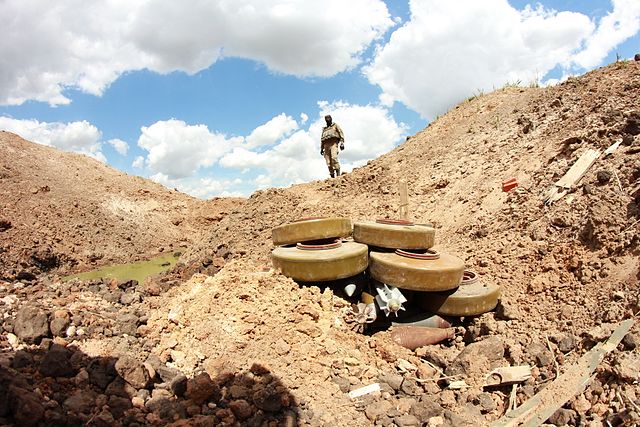
Photo: Ministry of Defense of Ukraine
But today, Igor had other things on his mind. Instead of football, he offered tips on staying safe from landmines and unexploded ordnance. The forests and farmland of Donetsk are plagued by landmines, both old and new. While WWII landmines are still being discovered 70 years later, fresh minefields and unexploded ordnance have swept across the region.
Igor stressed two basic rules and made Sasha repeat them to ensure he remembered: “Don’t walk on grass or unpaved paths.” He added, “Don’t pick up anything you haven’t dropped.” The cruel irony of war is that the glittering allure of cluster bombs, the tantalizing mystery of unexploded ordnance, and the deceptive charm of booby traps ensnare innocent children with a deadly fascination far more than they ever captivate trained soldiers.
Igor left and we’re back home. Mama, with polite curiosity, asked why I didn’t bring Igor for breakfast. I pretended not to hear her; I’m in no mood to talk today.
As planned, Papa went to the bank as soon as it opened. He returned later than expected, around midday, because he stopped by Sasha’s school to collect his records, which wasn’t part of the plan. Mama was initially furious about his tardiness, but calmed down when she learned about the school records.
Papa is fuming. He got a quarter of the euros and dollars he would’ve received if he’d exchanged them just a few months earlier. “Long before the war gets a chance to kill me, the banks already did,” he said.
We started loading the Zhiguli right after lunch. Grandpa had arrived early in the morning, bringing the spare car keys. Although our journey is less than one hundred kilometres, he checked the car’s roadworthiness as if we were about to drive across the continent. Oil level, coolant, belts and hoses, battery, brake fluid, windshield fluid, tire pressure—he inspected every part of the car. I don’t think Grandpa was fully aware of what he was doing for that long; he just needed something to keep his mind occupied.
Beneath his hard shell, the former communist is quite emotional about our relationship. For many years, he has taken me for strolls in the park on Saturday afternoons. From nature to economics, capitalism to communism, war, religion, and nationalism, there is rarely a topic he hasn’t discussed with me.
Few would expect a teenage girl to have such nerdy talks with an old man, but he was my hero. He is my hero. Even after I met Igor, my Saturday afternoons were reserved for Grandpa. Today, he shows no emotion about my departure, but I know there will be a vacuum in his heart that he will silently take to his grave.
Loading turns into a nightmare. Most of our clothes and kitchen items are crammed into large black garbage bags because we don’t have enough proper luggage. We only have one suitcase, one duffel bag, and our backpacks—just what we had needed in the past for our trips to Crimea.
The suitcase and the sewing machine go into the trunk first, followed by the duffel bag and backpacks. Then come the garbage bags, stuffed into every remaining nook and cranny. Mama is relentless; she doesn’t leave even the tiniest space inside the cooking pots unfilled. She packs those gaps with groceries, cushioning them with clothes, determined to make every inch count.
Pillows, duvets, and winter clothes pose the biggest challenge—they’re just so fluffy. The pillows go into the aisles of the back seats, while the duvets are spread on top, making the back seats feel elevated. The TV, wrapped in two bed sheets, stands precariously in the aisles, propped up by all the pillows.
Sasha, Benichka, and I will sit in the back, and our heads will almost certainly hit the headliner. The winter clothes are stuffed into the rear deck, blocking the view through the rear windshield. Is this a sign that Donetsk is now behind us, something we shouldn’t look back on? Maybe I’m overthinking. Anyway, Papa adjusts the wing mirrors so he can still see what we’ve driven past. Mama will stow food items in the footwell of her seat.
Amazingly, we managed to fit everything we had packed. Even more surprisingly, we still have room on top of the car.
Mama’s eyes light up—she wants to bring the refrigerator along on the roof. But Papa quickly shuts that down: “Nonsense! The compressor oil will flow into the cooling lines, and all you’ll have is a cabinet that won’t cool.”
Mama doesn’t argue back; when it comes to physics, she never challenges Papa. He’s an engineer, after all, as is his father.
Now Mama wants to carry mattresses. Two of them will be tied on top of the car. Papa has done most of the heavy lifting alone so far, but now he needs Grandpa’s help to carry the mattresses down three flights of stairs from our third-floor apartment.
After loading the car like a camel preparing for a desert trek, we returned to the flat and sat down for a quiet moment. It’s a Slavic tradition called sest’ pered dorogoy, a pause to gather thoughts, remember anything forgotten, and wish for a safe journey.
When the moment passed, we left the apartment one by one. Mama was the last to step out. With tearful eyes, she made the sign of the cross, locked the door, and handed the keys to Grandpa.
Grandpa kept waving his hand as Papa drove past him. His image in the rearview mirror started becoming smaller and smaller until it finally disappeared.
The density of the Khrushchyovka apartment blocks on both sides of the road turned lighter as we approached the suburb. The view was replaced by a jungle of concrete and rusted metal spread across miles, the remnants of the heavy industries that Donetsk was once famous for.
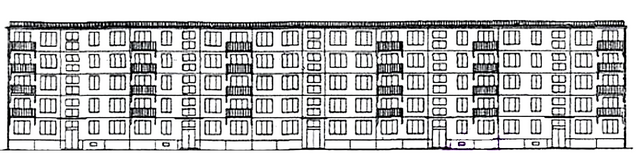
Khrushchevka II-35. Facade diagram
Once upon a time, these places were alive with the constant texture of sounds created by the vibrant enterprise of machines and humans—the rhythmic clanking of machinery, the loud chattering of workers at the cafeteria, and the distant hum of conveyor belts in motion. They too are captured in the rearview mirrors of tens of thousands of workers who made their livelihoods here.
We crossed the first rebel-held military checkpoint as we left Donetsk and entered the countryside. The rural areas around Donetsk? Nothing special to talk about.
Friends who’ve been to western Ukraine always rave about the breathtaking views there. I’ve never been to western Ukraine. My geographic knowledge of Ukraine is pretty basic: Crimea in the south, Dnipropetrovsk in the west, and Kharkiv up north.
A group of young men carrying heavy weapons, all in civilian clothes, has just stopped our car in the middle of nowhere. There’s no settlement in sight. It’s nerve-wracking for all of us, and you can see it in our faces.
The absence of any human settlement and the lack of uniforms in the armed group only add to our fear. Papa talks to them through the car window. They let us move forward after a few routine questions, and we all breathe a sigh of relief. So far, the separatist soldiers have caused no problems. Papa hasn’t even considered using Uncle Vania’s contacts.
Sasha speculates about what the dacha where we’ll be staying might look like. Papa tries to manage his expectations. The place hasn’t been regularly inhabited for a long time, with only occasional day trips from Mama’s cousins. “Think of it as a summer camp, Sasha. We’re not going to stay there for long,” Papa says.
We drove past a few old, decommissioned coal mine fields. Each one looked eerily similar, marked by pyramid-shaped mounds of soil piled high from past excavations. The lakes that filled the former pits glimmered under the sun, a stark contrast to the barren land around them.
In the distance, the skeletal outlines of workers’ housing blocks loomed, vacant and forgotten. These blocks were once filled with families who toiled in the coal mines. Now, they stand empty, windows shattered and doors ajar.
Ukrainian military personnel had established a makeshift camp in one of the abandoned apartment blocks, creating the first checkpoint we encountered in the government-controlled area. Papa stopped the car as he was signalled to do so.
Papa tells us that he will do the talking if needed and asks us not to try to help him during the conversation.
After the car stopped at the checkpoint, Papa was asked to step out. A young officer, around Igor’s age, interrogated Papa for a few minutes while two other soldiers did a brief inspection of the luggage in the trunk. When Papa returned to the car, the same officer asked Sasha to step out.
Mama shouted loudly, “no.” The officer gently explained Mama not to panic. Mama insisted on going with him, but the officer politely persuaded her not to get out, saying Sasha wouldn’t be taken far from the car. Sasha came back in a few minutes, and we were allowed to proceed with our journey.
The officer made Sasha’s day. My little brother can’t stop talking about it. The questions were simple: Where are you going? What’s inside the car? How many members are in your family? Where are you from? But most importantly, Papa and Sasha provided identical answers. Thankfully, Sasha didn’t mention Igor.
The trip so far has been smooth, contrary to our expectations. We were stopped a few more times after entering the government-controlled area. Papa only needed to show his ID and explain where we were heading.
Now, we’ve finally reached Volnovakha, a small town with one main street. Our destination is less than a 10-minute drive from here. Papa stops at a local shop to buy some water and ayran. Mama has already packed enough bread, kolbasa, cheese, salo, tomatoes, and cucumbers in case the gas stove isn’t usable.
Our Zhiguli finally rolls to a stop at the dacha’s main gate. Papa unlocks the double iron doors and drives down the semi-paved driveway, parking the car near the backyard. He’ll bring it closer to the house once it’s been cleaned, to make shifting the luggage easier.
The backyard looks like a museum of junk metal. Rusted bits of window frames, fences, and even an old electric pole are scattered everywhere. It seems Mama’s cousins haven’t quite forgiven this place for the hard work it demanded of them in their childhood.
Or maybe it’s just the nature of Donetsk industrial workers—they show more respect for factories than for agricultural land! Either way, the backyard has every reason to feel betrayed. After all, it stood by the family, providing food for survival when they needed it most.
In one corner of the backyard sits a black Volga, long retired from the job it was made for. It’s now at peace with wild grasses, shrubs, and insects that have made it their home. As cynics might say, when escape is impossible, you might as well make the best of it. There’s hardly any dignity left in the forgotten items scattered around.
A few fruit trees stand tall, bearing oddly shaped fruits. The pears taste like sand, and the apples are as sour as lemons.
The only bright spot is the wildflowers. While the fruit descends into chaos, the flowers thrive. The wilder the contrast, the more beautiful the blooms become.
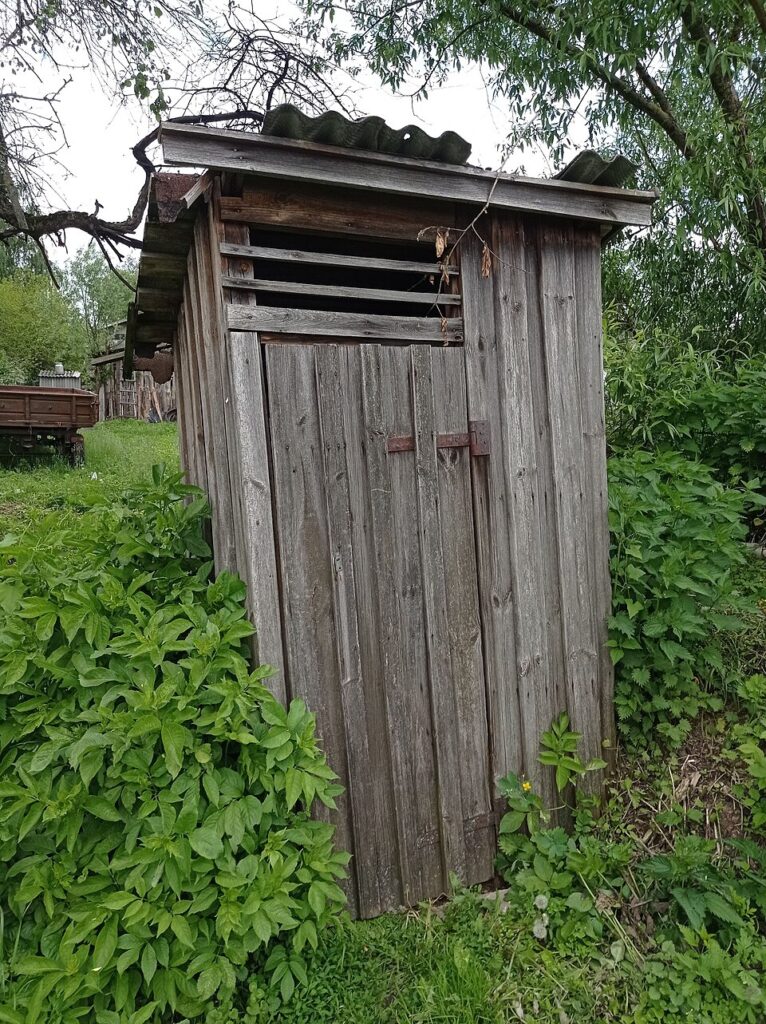
At the opposite end of the black Volga is the toilet. Yes, the toilet. The dacha has a bathing facility inside the house, but the toilet is outside.
You have to walk all the way to the back end of the compound to reach it. It’s a simple structure—wooden walls on all sides, with a wooden door. The roof is made of tin sheets, leaving a gap for air circulation. The floor consists of a wooden platform with a rectangular hole in the middle.
That’s it. No pan, no commode. Flies buzz all around, and the awful smell and buzzing flies almost make me vomit as I walk to the loo.
Papa heard me screaming. He understood why I was screaming. He came close to the latrine to accompany me back to the house. For the first time in my life, I wished I were dead. A strange feeling of nothing being worth living quickly engulfed me when I thought that this was what I would experience every day.
As Papa wiped my tears and consoled me, Mama yelled from a distance, “Stop creating a scene, Masha. You are not the only one facing it. You won’t stay here long anyway. Thank God you have a dacha to live in. Families that went to Kramatorsk and Sviatohirsk are cramped in 10-meter cabins, with one common toilet for 50 people.”
Village toilet: Photo Credit Nickispeaki
That’s my mother—a coal miner’s daughter. Harsh conditions don’t shake her much. She faced occupational hazards herself, working in factories during her early years.
I jumped into the Zhiguli as Papa drove to Volnovakha to pick up some handyman supplies. Sasha was itching to come too, but one look from Mama was enough to kill that ambition.
We stopped at the first café we found in town. While I was in the toilet, Papa got surrounded by half a dozen men—mostly elderly—wanting to know the latest from Donetsk. You could see the sympathy in their eyes for those who fled here for shelter. But beneath that, you could also sense their fear—wondering when it might be their turn to seek refuge elsewhere.
We came back from the town centre with a few light bulbs, some wire, and switches. The water pump that supplies the kitchen and bathroom has unstable wiring—an easy fix for my engineer father. He skipped buying the English commode—the price was too high. He’d rather drive to Mariupol for that. Mama also needs some swing accessories and household stuff, so it makes more sense to make one proper trip to Mariupol than to pay Volnovakha’s insane prices.
Fortunately, the stove has a gas supply, so we manage to have a decent meal. There’s no refrigerator, but that doesn’t seem to bother Mama much. The temperature in the cellar beneath the kitchen is much cooler than above, so she stores all the leftover food down there.
It’s 9:30 PM, and Sasha and I don’t know what to do next. It’s too early to sleep. There are four light bulbs in the house, and Papa has just installed one near the toilet in the backyard. Otherwise, everything is dark. The moon doesn’t provide much light either, and the roads outside the dacha are pitch black. No lights glow from the neighbouring houses, leaving us wondering if anyone even lives there. We haven’t seen a soul since we arrived.
The mobile signal is frustratingly weak, barely enough for sending text messages, let alone browsing the internet. I had a brief chat with Ira about our arrival in Volnovakha; she promised to pass the message to Igor as soon as possible. Meanwhile, Sasha has been pestering me for a while, waiting to connect to my laptop via mobile internet. I’ve lost count of how many times I’ve told him that the signal is far too weak for a connection.
To make matters worse, my phone is also running out of data credit. Tomorrow, when Mama and Papa head to Mariupol, Sasha, Benichka, and I plan to walk to Volnovakha to top up my data.
There is only one laptop, and I’m the one who primarily uses it. Mama wants me to leave it in the dacha. The plan is to buy me a new one once Papa and I reach Kyiv. The money Grandpa gave me in the envelope will be used for that.
Benichka was tied to his leash almost the entire time. Tomorrow, Sasha and I will be cleaning the weeds—who knows what’s hiding inside all those wild grasses and shrubs? It’s a heck of a job, but lazy Sasha doesn’t mind hard work when it’s for Benichka’s welfare.
By day two, the dacha feels a lot more liveable. Papa brought an English-style commode all the way from Mariupol. He even reinforced the latrine platform with an extra layer of wood. The wooden walls got a coat of some kind of fly-repellent disinfectant. It smells pretty strong, but as long as it keeps the flies away, I’m good with it. Now there’s a light bulb inside the latrine with a switch on the outside, which is handy. And he set up a really long garden hose running across the yard to fill water into the toilet flush.
Mama picked up a few essentials for the house, plus some ribbons and fabric. I know that once she’s done setting up the dacha, she’ll dive into her dress-altering project. Her plan is to resize her fancy dresses to fit me. She’s got two weeks left before I head off to Kyiv.
I can’t stop thinking about what Sasha will do in this empty village without me. Back in Donetsk, he had his own little world—a space of independence filled with friends and playgrounds. Here, it’s unlikely he’ll find kids his age. Ukrainian villages are mostly filled with babushkas, dedushkas, and their pet dogs.
He’ll probably have to wait until school starts on September 1st, the Day of Knowledge, to finally meet other kids. That day’s a big deal in Ukraine—kids dress up, bring flowers for their teachers, and come with family for the ceremony. The morning usually begins with a welcome event, and older students help ring in the new school year with the younger ones during the “first bell” ceremony.
I just hope the school gives Sasha a chance to make friends and feel like he belongs again. That is—if the local high school even agrees to enrol him. Papa and Mama plan to visit the local council and the raion administration to sort everything out, including his schooling.
Today, Sasha, Benichka, and I got a good look around Volnovakha when we went out to buy some mobile top-up credit. We found a local shop that installs television networks and internet modems. If Papa stops by there tomorrow morning, we might have both TV and internet up and running by the afternoon.
Mama’s feeling uneasy about the spending. But internet access isn’t something you can live without anymore, so she’s not going to question that.
The bigger expense is coming in two weeks, when Papa takes me to Kyiv to settle me into the dorm. They’ll have to use a big chunk of their remaining savings just to get me set up. Even the train tickets have gone up so much lately, the travel alone will leave a dent.
There are two options for getting to Kyiv. The more expensive choice is to take a three-hour bus ride to Zaporizhzhia and then catch the high-speed intercity train to Kyiv, which totals around 11 hours of travel time. The cheaper option is to take the night train from Mariupol, but that takes about 19 hours. We decided to go with the second option, hoping to save some money despite the longer travel time.
Most Ukrainians my age would travel alone. If it weren’t for the war, Papa might have let me travel by myself. My parents feel compelled to provide me with emotional support since I am still recovering from the shock of being displaced from Donetsk.
Mama’s childhood friend, Aunty Dasha, is an angel. She’s originally from Donetsk but now lives in Kyiv with her husband and their three young kids. Her husband, Uncle Vlad, works for an international humanitarian organization. He’ll meet us at Kyiv Central Railway Station, and we’ll stay at their flat on the left bank for two or three days—just until my accommodation at the KIMO dorm is finalised.
On the first day, Uncle Vlad took Papa and me to KIMO. He said he’d be a couple of hours late to work, but he didn’t seem too concerned. He said he had a good personal relationship with his supervisor—who, he mentioned, was from Uganda.
On the second day, Papa and I went to the campus on our own. We wrapped up the administrative tasks left from the day before, then headed to an electronics store and bought a laptop computer with the money Grandpa had given me.
It’s not a super powerful machine, but it’s a decent one. I’d be lying if I said I wasn’t excited—it’s the first laptop that’s truly mine. I haven’t opened the box yet. I want to save that moment for myself—to unseal it, touch it, leave the first smudges with my fingertips. Maybe I’ll do it in a day or two, once I move into the dorm.
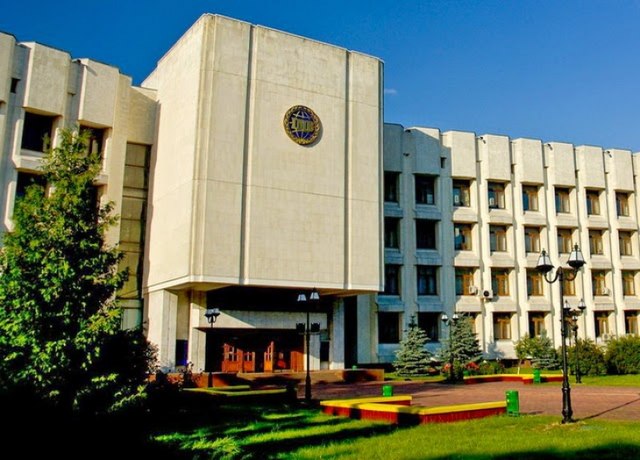
KIMO. Photo - mfa.gov.ua
Papa headed back to Mariupol on the fourth day, once I got settled in my dorm. It was a relief—my parents had been overthinking possible bureaucratic hurdles because I came from a separatist region. But in the end, everything went surprisingly smoothly.
The dorm is just a five-minute walk from the faculty. It’s a shared room—my roommate, Katya, is in her second year. Her previous roommate got married halfway through the course, dropped out, and moved to Geneva with her diplomat husband.
The dorm I’ve been assigned is on the third floor, and—pleasant surprise—each room has its own attached bathroom. Two of my classmates starting undergrad in Kharkiv weren’t as lucky; their dorms have shared bathrooms at one end of each floor. I feel oddly privileged not having to queue in the hallway during morning rush hour.
Inside the room, it’s simple but decent: two single beds, two small desks with chairs, and a large built-in wardrobe with space to hang winter coats. The only window is directly opposite the door. In the morning, sunlight pours in, slicing the room in half—drawing a soft, invisible line between our belongings, our lives.