CHAPTER EIGHT
The World Belongs to Ordinary People
Igor is gone.
The shock has passed, replaced by a vast, hollow emptiness.
Pain is inevitable. Suffering is a choice. I’ve had to remind myself of that—again and again.
I slept through the first three days.
Katya skipped work. Stayed at the flat like a shadow. She wouldn’t let me lock my bedroom door. Kept knocking even when I was in the toilet.
I told her to stop following me. I wasn’t going to kill myself.
Mykyta and Okello came every evening after work, for a week. Okello brought a poker set. We played for money—like real gamblers. Money, alcohol, swearing. The full set.
I started returning to regular life after about a week. Thankfully, I still have part of my master’s course left. Between classes and office work, my days stay full.
Some people run after time. In my case, time runs after me. Any empty slot in the day becomes a source of pain.
The cruellest one is the moment between hitting the pillow and falling asleep. A whole year passes faster than that tiny stretch of time.
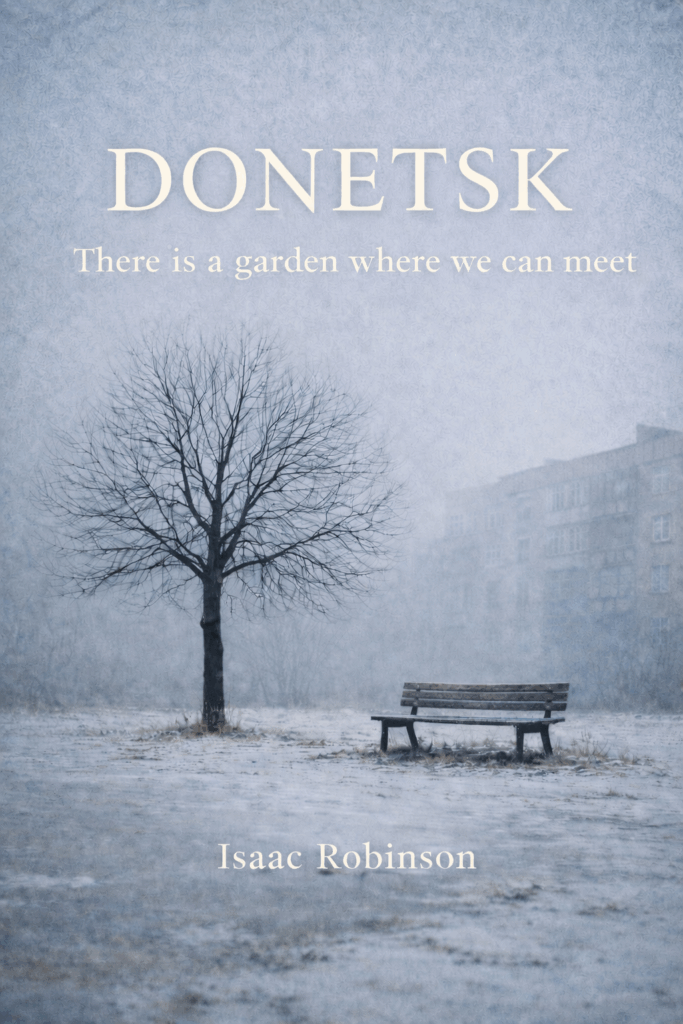
Peremoha Park on the left bank is breathtakingly beautiful. It’s a ten-minute walk from our flat. I’ve been coming here often, ever since we moved in, back in early autumn.
That was when the trees first began to turn yellow. Then a deeper yellow. Then the leaves fell. Autumn’s colours were gorgeous—red, green, yellow.
These days, I come to Peremoha every day. It’s dark now. Cold. Leafless. And somehow, even more beautiful than autumn.
I don’t know if any of you would agree with me, but I think a tree is most beautiful when it’s naked.
You don’t truly see a tree—don’t really know it—when it’s covered in leaves. The story of a tree is the story of its leaves, until they all fall.
That’s when the real story begins. That’s when you finally see the tree.
The trunk, the branches, the twigs—each with its own shape and design—standing alone, yet connected. The soft glow of moonlight slips through the gaps between them, a quiet wonder.
The stars crown them—tiny jewels resting and twinkling on top. Then comes the snow, laying its bright white hush over the whole frame.
It is amazing how a tree, losing all its own decorations—its own leaves—finds peace and harmony.
Standing naked, covered by the bright soft snow, against a star-studded black and blue sky, bathed in the gentle, fleeting light of the moon— the tree shows no sign of suffering.
No grief for what is lost. No desperation to hold on.
It knows the leaves will grow again. And until then, it stands still.
At ease.
Content in the company of the moon, the stars, and the snow.
Not waiting, not rushing. Just being.
Katya came back from work with a wild smile on her face and a bouquet in her hand. She and Mykyta are getting married in June.
I got swept away. A rush of joy burst out from the wilderness inside me, flooding me like a sudden surge of the Ganges River. A drop or two gathered in my eyes, too.
The flood receded as fast as it came. Igor’s face flashed in my mind, sharp as a sudden blow of sorrow.
I try to behave normally, not to spoil Katya’s happiest moments. Like Abu Ward—the last gardener of Aleppo—who kept growing flowers for the city’s residents until a bomb fell on his nursery and took his life. Abu Ward once compared the sound of war to Beethoven’s music.
Life does not wait for grief to finish its course. Joy returns—not in defiance of sorrow, but in spite of it. We carry our losses quietly into the next season, like dried leaves crushed into the soil, feeding whatever comes next.
No cooking tonight. Katya ordered pizza and cracked open a cold bottle of prosecco. We’re planning the wedding!
The first thing on the list is the wedding dress.
I suggested we pick one from an online store in England and rope Okello into bringing it back when he goes home next time. Katya just laughed.
“Forget it,” she said. “He’ll refuse the money – and then it’ll look like we handed him a shopping list for our wedding gift.”
The wedding will be small. Katya’s family from Rivne, Mykyta’s from Zaporizhzhia, mine from Mariupol, and a handful of close friends from Kyiv. Fifteen, maybe twenty people-no more.
The more we talk, the more complicated things get. We will have nine, maybe ten people coming to Kyiv from out of town. They’ll need somewhere to stay for at least two nights. My family will most likely crash with Uncle Vlad. Katya doesn’t want anyone at our place as we need the space and privacy for wedding arrangements. Mykyta’s place is already packed like a can of sardines — no hope there. It looks like we’ll have to book hotel rooms. Another thing to add to the bill.
Talking about accommodation left me reeling. Come June, after the wedding, Katya will be gone, starting her new life, building her own home.
I’ll have to let go of the only person who stood by me through the hardest, loneliest years of my life. The thought of it makes my chest ache, my stomach churn. The feeling is the same as the day we fled Donetsk — losing a home, and with it, a part of myself.
Katya raised the topic of wedding photography. I told her to leave it to me. She tried to get some details, but I shut her down, keeping this a secret.
I want to surprise her with a high-resolution smartphone for the wedding. Her phone hangs by a thread, and none of us has a camera worth speaking of. She’ll want to remember a thousand little moments — and we’ll need a camera good enough to catch them all.
I need to save for the phone before June. Christmas wiped out almost all my savings. It was my first year with a real job, and I got a little carried away — buying presents for everyone I could think of, even Grandpa, Grandma, Ira, Igor’s mother, and Aunty Zhenia.
Aunty Zhenia was a teenager when her parents moved into the same apartment block as Grandma and Grandpa. Soon after, her father left for Western Siberia, where wages in the oil fields were much higher than average Soviet salaries.
When Aunty Zhenia began university studies in Donetsk, her mother joined her father in the Ukrainian community formed in Tyumen Oblast. Aunty Zhenia stayed behind, living with Grandma and Grandpa until she finished her degree. She became like Papa’s elder sister.
Okello calls during office hours. The virus everyone’s talking about — the one that started in China – now affects people in the UK. His kids’ schools are likely to shut down, and his wife wants him to return to London to stay with them. He says he’ll be leaving Kyiv this week for a month.
Everything starts shutting down, one thing after another. Kyiv airport is closed, so Okello won’t be able to return anytime soon. Worse than that, the entry-exit checkpoints are shut down too. Grandpa won’t be able to come to collect his pension.
And then, just when we thought it couldn’t get any worse, the news hit us like a punch in the chest. Within three days of each other, Katya and I received our employment termination letters – two months of salary in lieu of notice, one month of severance pay.
Time keeps ticking as we search for jobs. We have three months’ salary in hand. Katya has some savings; I have none. And yet, her case feels more painful than mine — her savings were meant for her wedding.
Oh gosh! Papa is on the phone — Grandpa has a fever and a dry cough. All entry-exit checkpoints are shut down. Papa cannot go to Donetsk. Grandpa will have to deal with this.
There’s no COVID-19 test centre in the non-government-controlled area. There is an option to send samples to Rostov in Russia. It will take seven to fourteen days for the results to come back.
What’s the point of sending samples for the test? Even if it comes back positive, there won’t be a hospital bed waiting for him. Donetsk is at war.
Humans are busy at war with each other, while a creature too small to be seen by the naked eye rampages through them, exterminating at whim and caprice.
Grandpa has moved into our vacant flat in Donetsk to keep his distance from Grandma.
Aunty Zhenia drops food at the front door twice a day.
I can see it all over for Grandpa. With its unseen, unfailing strings, the invisible universe has webbed the stage for his departure.
The stage carries the same architectural design that nourished his earliest memories of this world — memories of a war-ravaged, hostile world, with only a mother by his side. This time, only Aunty Zhenia is by his side — his son and grandchildren cannot cross the checkpoints. Such is the cruelty of war.
Last night, I spoke with Grandpa on the phone for the last time.
He passed away — no one knows precisely when — and Aunty Zhenia discovered it only in the morning, when he didn’t answer the doorbell.
The two men who shaped my childhood and teenage years are now both just memories.
Grandpa’s death is the last nail in the coffin of my beautiful world — the world that began to crumble when I fled Donetsk, and took an irreversible, destructive course with Igor’s death.
And here I am.
Uprooted from the normalcy of life — a normalcy that now looks like heaven in hindsight — eternally separated from the two men who once crowned me the princess of their world.
Relegated to this living hell, where even paying the rent will be seen as a lifetime achievement.
Papa applied for an emergency pass to cross the entry-exit checkpoints on humanitarian grounds. Under the rules of both Ukrainian and rebel authorities, such a pass could be issued to attend the funeral of an immediate family member.
The rules promised compassion but delivered cruelty through the bureaucracy of both sides.
Waiting for the result of the application became pointless. The local authorities in Donetsk did not want to keep the body for long. They cremated it. The face of his father, Papa, never saw it again.
Grandpa left a note by his deathbed, asking Papa to waive his inheritance rights to the flat he and Grandma owned together, and pass it to Aunty Zhenia. The old materialist trusted Aunty Zhenia to care for Grandma, but wanted her to have a material tie to the flat where Grandma would live.
Three days have passed since Grandpa died. I spent most of the time lying in bed. Katya didn’t disturb my need to be alone, except for calling me to join her for meals, which she has been cooking by herself these past few days.
Mykyta came early this morning. Fortunately, he hasn’t lost his job like the two of us.
His low-paying government job has finally revealed its strength — security.
He works from home, and today, he’s working from our home. There isn’t much he needs to do remotely. He came here today with a mission: to push me out of the house. Three of us will take a stroll in the park in the late afternoon.
The moment we stepped into Peremoha Park, the smell of the air told me that it was my favourite time of the year. It was when I was in Donetsk with Igor, and it will always be.
The sweet scent of syringa and chestnut flowers is sinking into the air around me, heavy and soft. Tulips are piercing the ground, their rich green leaves cradling red, yellow, and purple bursts. Bird cherry trees flood the air with white flowers, tangled among fresh green leaves. Laburnum is dropping sheets of vivid yellow, like golden rain shaken from the sky. Hawthorn trees are standing heavy with white and pink blooms, like broken clouds resting on earth. Red maples are flashing a deep fire-red, burning quietly at the park’s edge.
Do you know, Mykyta – in Taoist philosophy, nature doesn’t have poverty, I said it without warning, cutting into the easy flow of his conversation with Katya as we strolled through the park.
“What’s on your mind?” Mykyta turned to me, his voice calm.
Look how rich the park is— effortlessly. The flowers don’t hoard sunlight. They don’t strive or compete. They simply exist – no earning, no proving. No hunger for ownership – be part of the flow. Leaves fall, feed the soil, and rise again. I murmured.
“And there’s no judgment. No moral ranking,” Katya said, easing into the thought.“A withered branch is just a phase, not a failure. A cloudy sky isn’t inferior to a sunny one. Don’t push the rock—curve around it, like a river. Be exactly what you are, without shame or embellishment… A cat doesn’t aspire to be a horse.”
Mykyta shook his head, half in disbelief. He spotted a bench, sat down, and leaned back.
“Look, we live in organized political communities. Humans need to live together for their security. We carry ideas that no other part of nature seems to have. And these ideas aren’t just our greatest strength; they’re essential to our existence.” – Mykyta responded.
Katya opens the flask and pours tea into the paper cups she’s packed from home. Joblessness has returned us to the quiet genius of earlier generations – the art of spending nothing unless absolutely cornered.
What if the ideas we hold sacred and universal, even call genius, are nothing but beautifully evolved lies, crafted over time to deceive us all? I challenged Mykyta’s unfettered loyalty to ideas.
“Like the idea that every human being is born with rights,” Katya said, picking up on my question. “In reality, what we see is a child born naked, crying out for help—from mother to nurse to neighbour—just to survive,” Katya continued.
Mykyta, armed with an advanced diploma in human rights, shifted uneasily. “So you think human rights are a bad idea?” Mykyta shot back, sharp and quick.
“It’s not human rights I’m against,” Katya said. “I’m against the fantasy that they arrive with the umbilical cord.”
“But does it make any real difference—whether we’re born with rights or gain them some other way?” Mykyta responded.
You know, Mykyta, I said, as we stood up from the bench and began walking back,
maybe we’d be less driven by superiority, less possessive, less judgmental—maybe even less destructive—if we understood that the rights we enjoy don’t come by birth, but through a willingness to live in harmony with nature and one another.
On the way back, Mykyta impressed us with his grasp of communication theories. He tried to explain the illusory truth effect, most of which went over our heads. What stayed with me was this: repetition makes falsehoods feel true, familiarity often beats logic, and when repetition is paired with authority, the effect becomes dangerously persuasive.
I did, however, understand how algorithms work—thanks to an example Mykyta gave. You won’t see a fruit in all the search results if you search for the word “apple” in a major search engine.
That’s because algorithms are designed to amplify what captures attention, not what’s accurate.
It’s the same in real life—what spreads isn’t always what’s true, but what people engage with most. Old ideas aren’t sacred. Some are just the best-dressed lies we’ve learned to live with.
It’s mid-summer. I still haven’t gone to Mariupol since Grandpa died. It looks heartless—not visiting my father—but it’s not just that. I’m weak. I can’t face the reality or reopen the conversation about Grandpa.
I turned down Papa and Mama’s offer to stay with them until I find a job. I won’t accept that defeat. I’ll stay in Kyiv as long as Katya and I can pay the rent
We’ve been in touch with the coaching centres where we used to teach. They’ve finally lined up some work for us starting next week. It’ll nearly cover the rent and slow the drain on our savings, which have taken a hit over the past five months.
We arrived in Rivne this afternoon. Katya and I chose to spend a few days in the rural west to recharge before work starts—her parents live in a small apartment complex in the nearby city, but we’re staying with her grandparents in the village. It’s typical western Ukraine—rolling hills, forests, meadows, and rivers in a quiet, green landscape.
On the morning of the second day, Katya took me to her favourite forest track. After a long walk, we returned to a lunch of traditional Western Ukrainian dishes—banosh with bryndza, stewed wild mushrooms, and pork baked in a clay pot with garlic and dill. After a short nap, we went out again, punting on the lake bordering the forest.
Remember, Katya, that video we watched a while ago—the Syrian gardener who kept growing flowers until a bomb killed him? I asked, smiling as the boat drifted into the middle of the lake.
“He was called the last gardener of… what was that city again?” Katya said, pausing mid-thought.
Aleppo, I said softly. His words stayed with me: the world belongs to ordinary people.
“Aha. That makes sense,” Katya said, her eyes scanning the lake. “The rich have their mansions, pools, spas, and cars. But for ordinary people, the whole world is open: forests, lakes, mountains, and a sky full of stars.”
So, if we don’t find real jobs again, we’ll just settle here and let the world be ours, I said, and our laughter rose and scattered over the lake like birds startled into flight.